
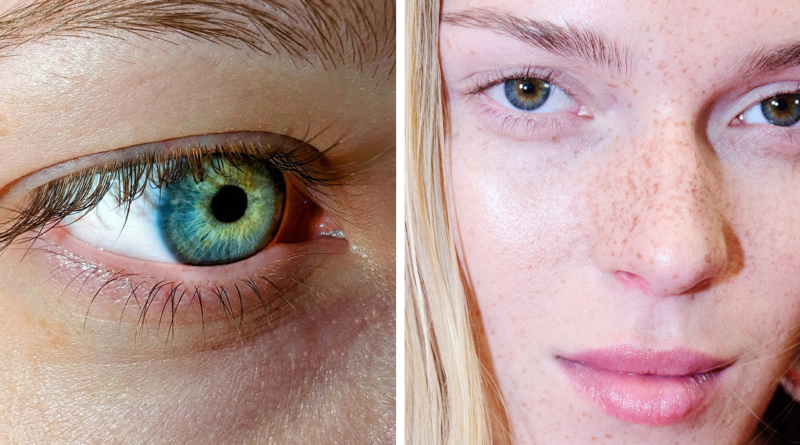
🤯 INCRÍVEL: How Rare Are Green Eyes, And What Genetics Says About Their Origins 😲
Cat-like eyes show up in searches everywhere. If the internet is this obsessed with eye color, how rare are green eyes in humans?
They’re uncommon enough that seeing them still feels like spotting a standout feature, even in a room full of people.
That gap between perception and reality is one of the most telling facts about green eyes.
Their rarity is also part of what makes them genetically intriguing and culturally overexposed. Green sits in the middle zone of pigment and optics, and it can show up in families in ways that don’t follow simple “like parent, like child” expectations.
Meanwhile, beauty culture and film treat green eyes as a shortcut for allure, sometimes spotlighting them on purpose.
How Rare Are Green Eyes?
Green eye color is scarce in reality, loud in culture. Globally, most people have brown eyes. A 2020 mini-review in the Journal of Cellular Physiology estimates that about 79% of people worldwide have brown eyes, compared with roughly 8%-10% with blue eyes and 5% with hazel eyes.
Only 2% of the world’s population has green eyes, ranking it near the bottom of the list. The same review notes that rare-colored eyes can include shades like gray, red, and violet.
Part of why green eye color statistics vary across sources is the boundary problem between green and hazel. Hazel eyes contain a mix of green, brown, and gold, and depending on lighting, angle, and the observer, the same pair of eyes can read as either.
Hazel is estimated at around 5% globally, putting it slightly ahead of green’s 2%, but the overlap means counts are rarely clean. If your eyes shift between green and brown depending on what you’re wearing, they’re almost certainly hazel.
True green stays consistently green across different lighting conditions, with no brown flecks or gold shift.
Those “red” or “violet” tones aren’t a typical natural eye pigment, though. Medical News Today notes that people with albinism can appear to have red or violet eyes in certain lighting conditions. And while green often gets labeled the rarest eye color in the world, the bigger takeaway is that true green is genuinely uncommon at a global scale.
There’s also a deep-time reason brown dominates the chart. The American Academy of Ophthalmology notes that around 10,000 years ago, everyone on Earth had brown eyes, tying the shift toward lighter eye colors to changes affecting melanin production.
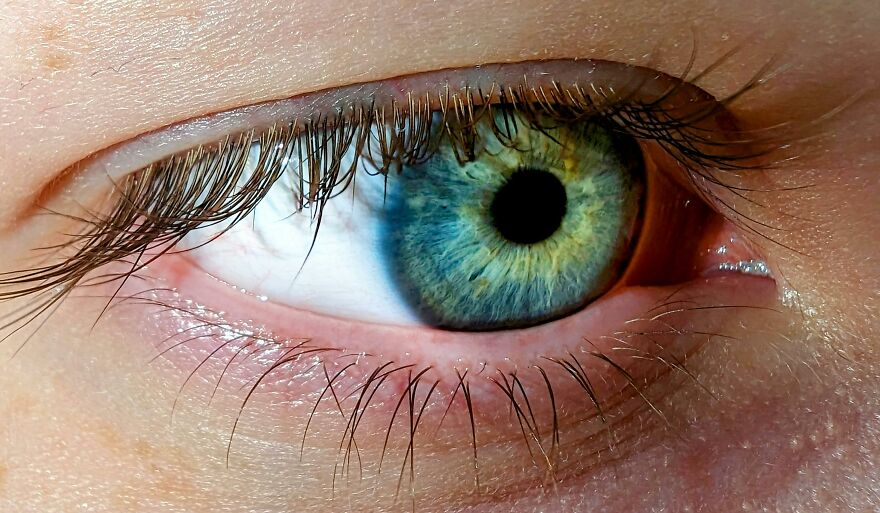
Image credits: VD / Pexels
Yet green eyes get a cultural spotlight that far outweighs their stats. In an All About Vision survey of more than 66,000 responses, 15.2% of readers picked dark blue, the kind of fixation usually reserved for legendary screen icons like Elizabeth Taylor.
Another 16.0% chose hazel, 16.9% picked light blue, and 20.3% ranked green as the most attractive eye color.

Image credits: adele / Instagram
Joaquin Phoenix
His green/hazel eyes have been part of his on-screen presence, including in his portrayal of Johnny Cash in “Walk the Line.”

Image credits: joaquinphoenixupdates / Instagram
Angelina Jolie
She is known for her natural light eyes, which she sometimes enhances for red carpet appearances.

Image credits: kinovolna / Instagram
Daniel Radcliffe
The “rare feature” obsession goes even further in film, where green eyes have been deliberately faked or attempted for iconic roles, another sign of how often this look gets chased in media.
In “Harry Potter and the Sorcerer’s Stone,” production tried to have Daniel Radcliffe wear green contacts to match the book description, but he had a severe allergic reaction that made his eyes red and watery, so the plan was scrapped.

Image credits: danielradcliffe_ig / Instagram
Orlando Bloom
In “The Lord of the Rings,” Orlando Bloom wore colored contact lenses to give Legolas his piercing, light-blue-to-green eyes throughout the trilogy.

Image credits: toysassemblehk / Instagram
The Genetic Lottery Behind Green Eyes
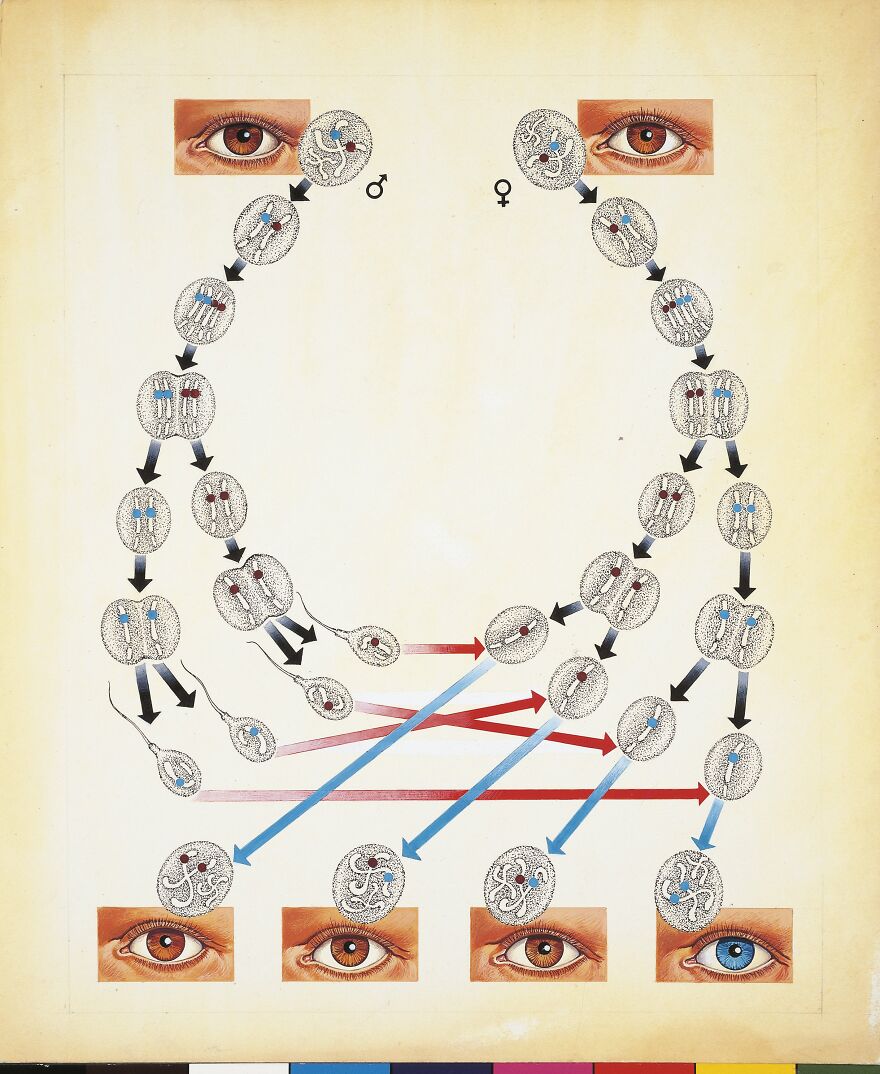
Image credits: DEA PICTURE LIBRARY / Getty Image
A review in the International Journal of Molecular Sciences highlights one especially famous marker in that same neighborhood: rs12913832, a variant located in an intron of HERC2, calling it the “most significant genetic influence” on eye color pigmentation. That is a big reason the HERC2–OCA2 area is often treated as the main “control hub” for the spectrum of common eye colors, including intermediate shades.
Green also seems to sit in the messy middle, genetically and visually. Another Journal of Human Genetics study reports gene–gene interactions involving HERC2 that affect hazel, and it presents evidence for interactions that play into green eye color determination as well.
On the biology side, the American Academy of Ophthalmology explains that eye color comes from the amount and distribution of melanin in the iris, and that green eyes are influenced not only by melanin levels but also by how light scatters in the eye.
Put simply, brown eyes sit at the high end of iris pigment, blue eyes at the low end, and green or hazel shades often fall somewhere in between.
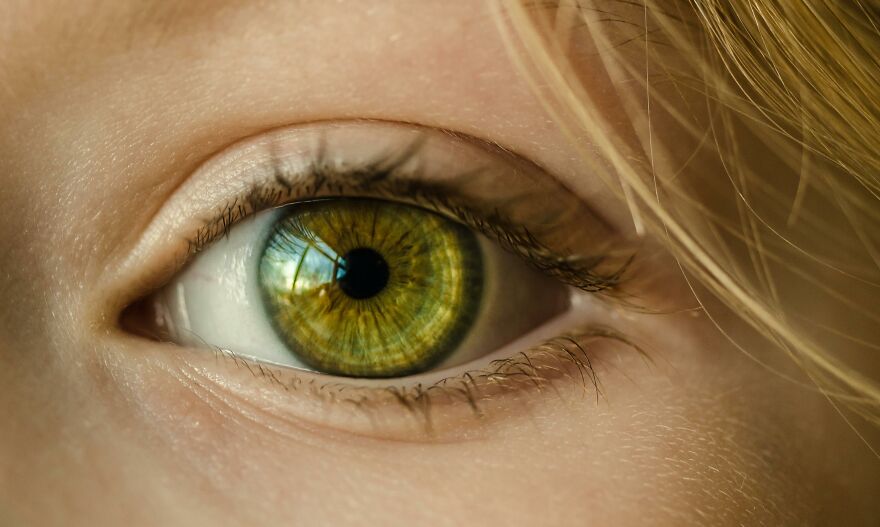
Image credits: ClickerHappy / Pexels
Where Green Eyes Are Mostly Found
Green eyes are not evenly spread around the world. The World Population Review breakdown says they cluster most heavily in Northern Europe, naming Ireland and Scotland as the standout hotspots and claiming that more than 75% of people born with green eyes can be found in Ireland and Scotland.
It also lists elevated shares across the broader Northern and Central European belt, including Iceland (14.15%), Denmark (20.45%), and the Netherlands (11.4%), which helps explain why green eyes can feel noticeably more “normal” in that part of the map.

Image credits: WWD / Getty Image
Thanks! Check out the results:
Total votes ·
Newsletter
Subscribe to Access
Exclusive Polls

By entering your email and clicking Subscribe, you’re agreeing to let us send you customized marketing messages about us and our advertising partners. You are also agreeing to our Privacy Policy.
Thank you! You’ve successfully subscribed to newsletters!
📢 Gostou da notícia? Compartilhe com os amigos!
Este artigo é uma tradução automática de uma fonte original. Para ler o conteúdo na íntegra: Clique aqui.