
🤯 INCRÍVEL: Underground Cities And The Surprising Reasons People Built Them 😲
Can humans survive without the sun? Apparently, they can, in fact, they already did.
The idea of living completely underground seems like a compelling Hollywood narrative, but for others, subterranean “homes” are their unwished-for reality.
Imagine what would make entire communities vanish beneath the earth, perhaps moments of crisis, sudden invention, or untold mystery.
Believe it or not, there are 8 underground ancient and modern cities where the sun never rises, hiding surreal, movie-like stories that were never meant to be told.
Derinkuyu, Cappadocia, Turkey
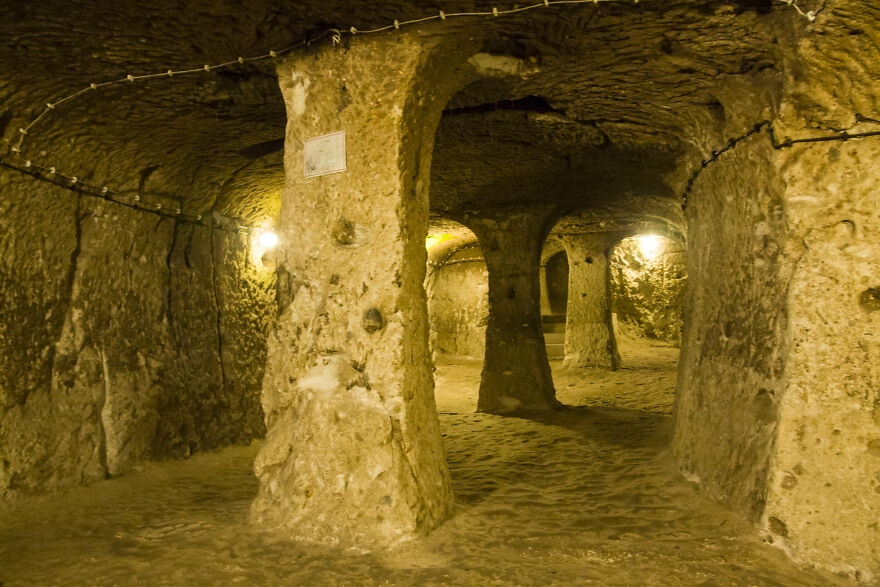
Image credits: Santiago Urquijo / Getty Images
In an ancient Turkish region lies an abandoned underground city of 20,000 inhabitants (per BBC). Part of a UNESCO World Heritage Site, the multi-level city of Elengubu, today called Derinkuyu, stands as the largest excavated underground city on the planet.
Excavation revealed 18 marvelous levels of tunnels deep at an eerie depth of around 250 feet. The inside revealed signs of not just human life, but also the formation of an entire civilisation beneath the Earth’s surface — from dry food storage and wineries to cattle stables and a chapel, and even underground schools.
“Life underground was probably very difficult,” said tour guide Suleman. “The residents relieved themselves in sealed clay jars, lived by torchlight, and disposed of dead bodies in designated areas.”
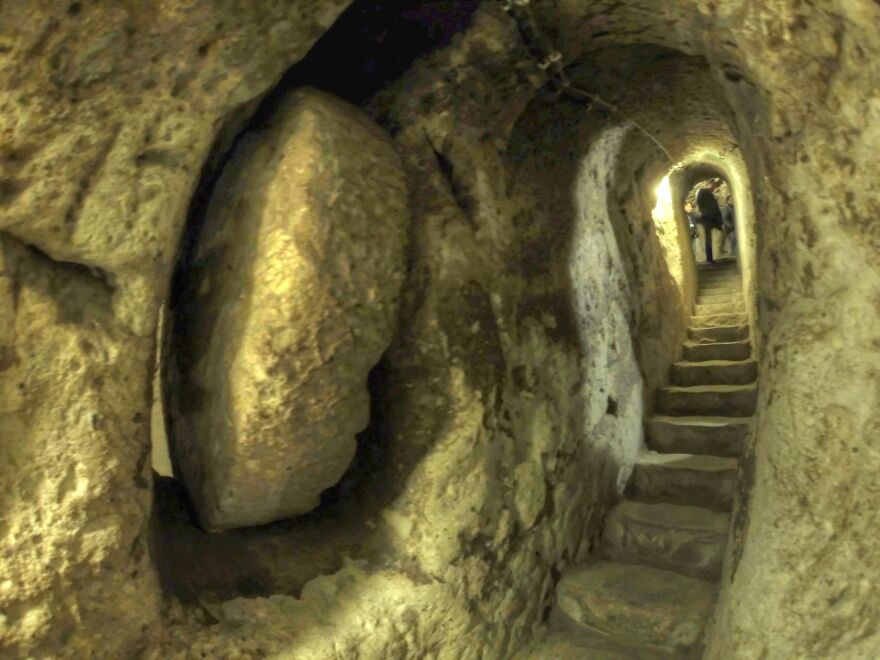
Image credits: Wikipedia.org
Why would anyone think of constructing an entire civilization away from the sun? Evidence suggests that Derinkuyu was built to store a variety of goods, but it mainly served as a temporary hideout from foreign invaders throughout the ages, as explained by Andrea De Giorgi, associate professor of classical studies at Florida State University.
“The succession of empires and their impact on the landscapes of Anatolia explain the recourse to underground shelters like Derinkuyu,” he stated. “It was at the time of the 7th-Century Islamic raids on the predominantly Christian Byzantine Empire, however, that these dwellings were used to the fullest.”
No one knows exactly when the strange city was built, but the Anatolian underground people, in or near the Cappadocia region, were mentioned in Xenophon’s Anabasis book, which dates back to 370 BCE.
Helsinki Underground City, Helsinki, Finland
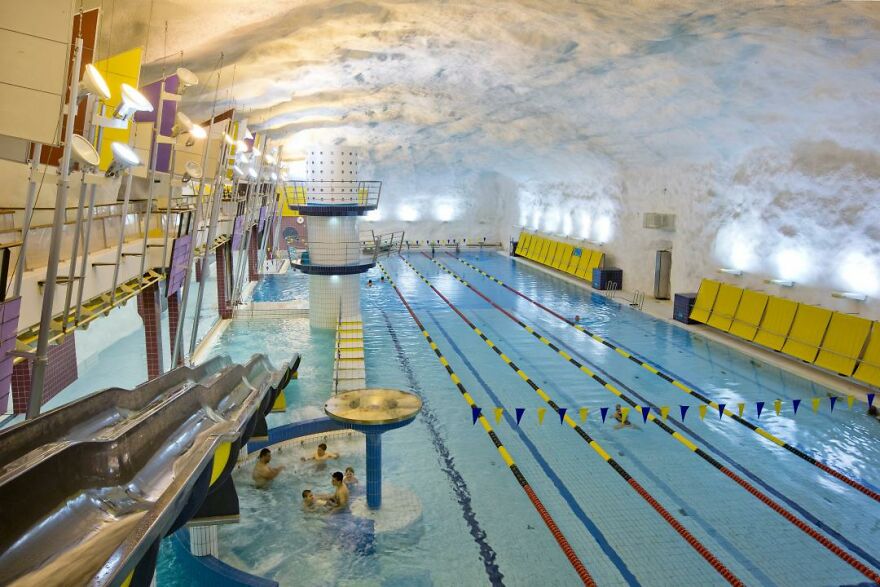
Image credits: theylied2you / Reddit
Did you know that there’s an entire subterranean world right beneath the capital of Finland? On the surface, the Nordic country topped the list of the world’s happiest countries for the eighth successive year (per BBC), but there’s more than meets the eye underground.
Right beneath the streets of Helsinki lies a gigantic network of nuclear bunkers and tunnels, large enough to accommodate more than the city’s entire population (per ABC News).
Charly Salonius-Pasternak, a leading researcher at the Finnish Institute for International Affairs, explained why Finland has a whopping 5,000 nuclear shelters in the capital and over 50,000 bunkers across the country: “There’s a historic sense that you should always be prepared. It might not be this generation or the next generation, but Russia is likely to attack Finland in some way.”
The scope of the facilities inside the city is mind-bending, ranging from a luxurious swimming pool and playground maze for kids to a nuclear shelter that doubles as a hockey rink.
Mr. Kurkijärvi, 45, a father of four, enjoys playing with his kids underground (per The New York Times). The “Leikkiluola” (or “Play Cave”) offers fun yet challenging activities perfect for last-minute play dates. “There’s safety,” he said. “With a little risk.”
This underground master plan acts as a safety net for Finns in case their formidable neighbor, Russia, decides to put their nuclear weapons to use. “We have to take care of the citizens, that’s the main reason we have this system,” said Tomi Rask, an instructor with Helsinki’s Civil Defense Department.
Meanwhile, Finnish citizen Kare Vartiainen, who was enjoying the underground pool, told ABC News, “We have such a horrible neighbor on the east side of Finland. We don’t have any other option than to go to NATO.”
Coober Pedy, Outback, Australia
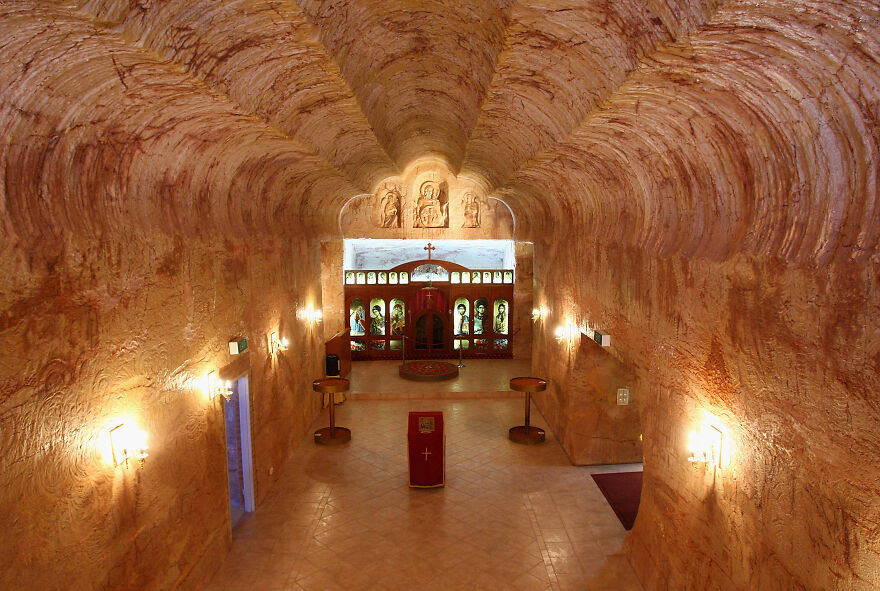
Image credits: Quinn Rooney / Getty Images
Coober Pedy, which translates to “White man in a hole” in the indigenous Arabana language, is a strange underground community located in South Australia, over 1,000 miles from Canberra. (per The Guardian).
Underground houses, bars, and even churches all hide beneath the ruthless temperatures of 120 degrees Fahrenheit (per Business Insider). There is even a well-equipped hotel for those wishing to spend a night or two in this odd Australian town.
On its website, the hotel promotes itself as “quiet, cool, dark and airy,” promising visitors to “get the best night’s sleep of your life.” And just in case you get bored underground, you can stop by a bookstore to read about Coober Pedy’s bizarre history.
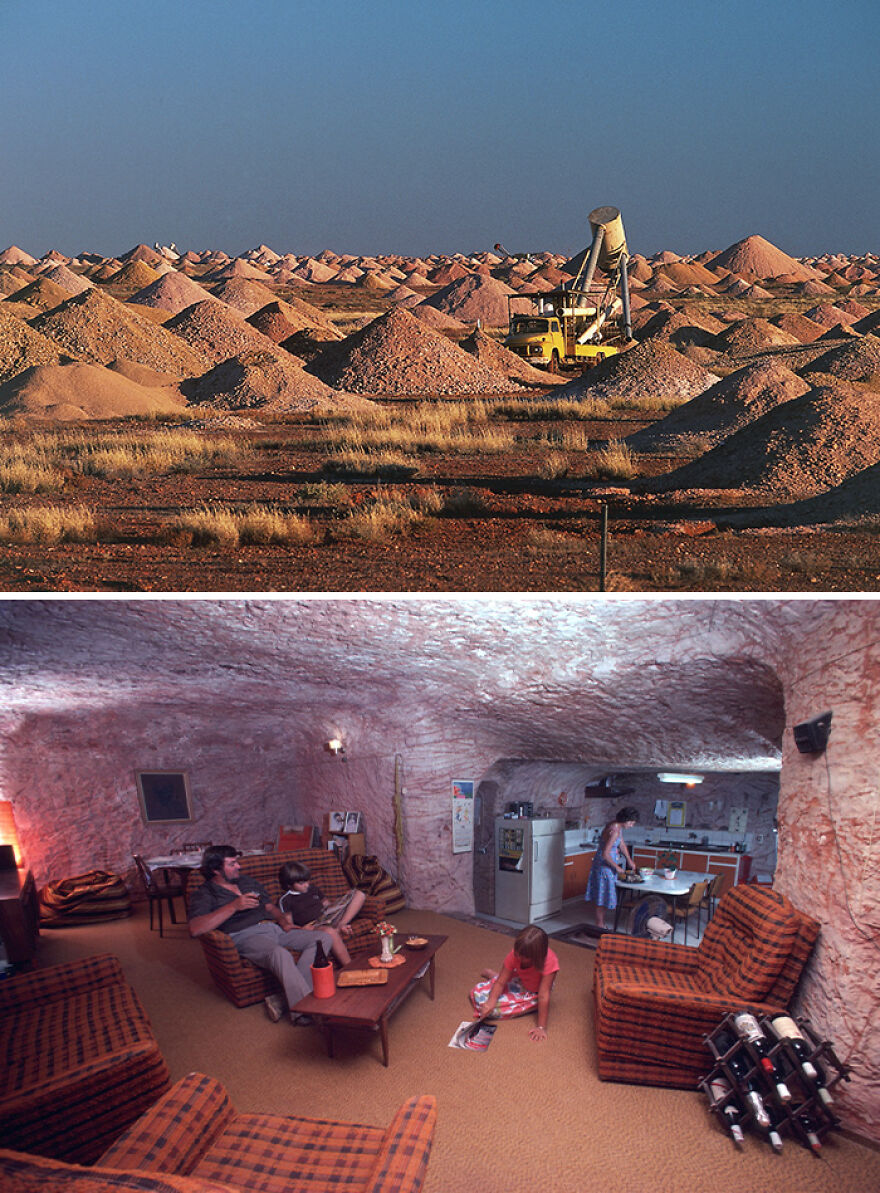
Image credits: DEA / G. COZZI / Getty Images
Coober Pedy was originally an opal-rich town where miners settled in 1916, though it is believed Aboriginal people inhabited the area long before.
Following the end of World War I, soldiers returned home and began mining the precious gem, which eventually became a steady business.
The Coober Pedy inhabitants later transformed discarded opal mines into survival dugouts to escape the harsh desert sun.
Today, around 2,500 residents live in cave-like houses in the ghostly subterranean town, where water is scarce, and food is only accessible from above ground.
Dixia Cheng, Beijing, China
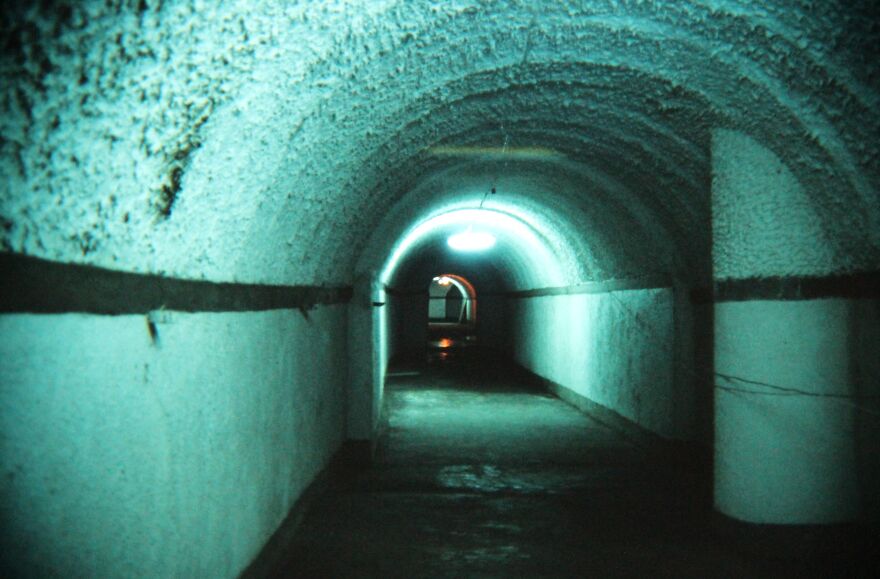
Image credits: wikipedia.org
Imagine a million people disappearing every night from Beijing’s streets and choosing to sleep in underground bunkers. It was in the late ’60s and ‘70s when nuclear paranoia took the world by storm amid the harrowing events of the Cold War (per National Geographic).
In response, Chinese Chairman Mao directed the country to start building apartments with bomb shelters strong enough to save lives in case of an atomic attack, encouraging everyone to “dig deep tunnels, store food, and prepare for war” (per the New York Post).
The Chinese people acted quickly out of fear, constructing approximately 10,000 nuclear bunkers in Beijing alone.
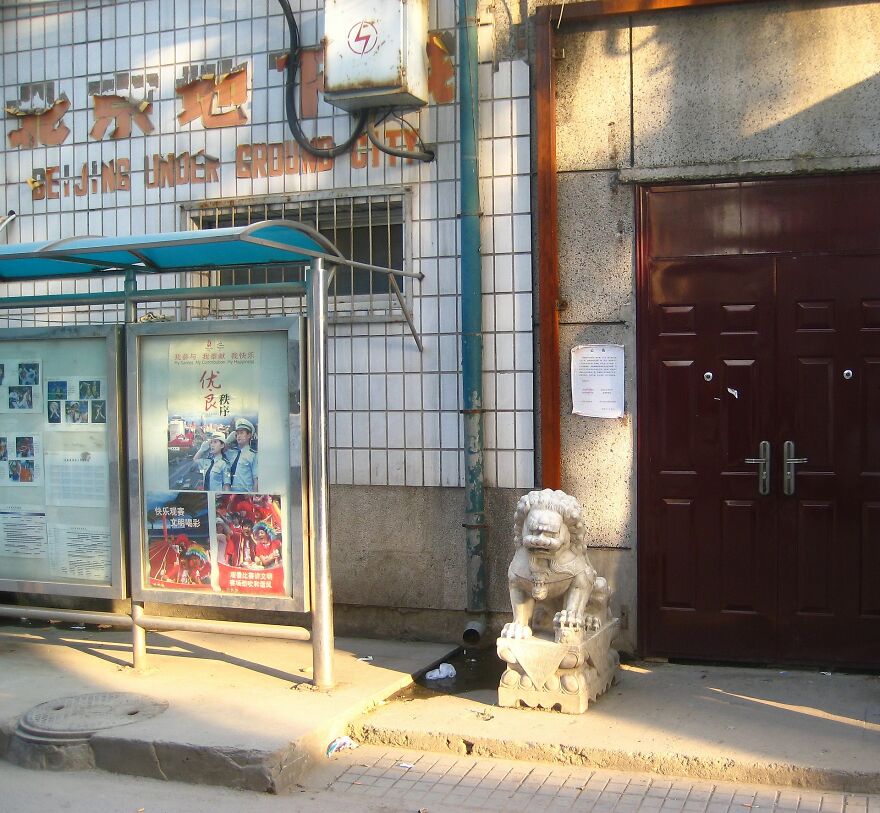
Image credits: wikipedia.org
Dixia Cheng, aptly named the “Underground Great Wall,” is one of the largest and most famous survival bunkers in China (per the Times of India).
The bunker is located right beneath Beijing city, consisting of a chain of tunnels and chambers covering an area of around 30 square miles.
The atomic bunker was never used for its intended purpose, though it is currently serving as a cheaper alternative to Beijing’s costly rent.
Natural light rarely reaches the inhabitants of Dixia Cheng today, who are mostly migrant workers and new young arrivals, tempted by the low rents underground and seeking new opportunities in the major city.
“I am doing well because I’m scared of being poor,” said one resident in Dixia Cheng, who lived in a 300-square-foot apartment with nine other people. “Many of my colleagues live above ground, but I think it’s too comfortable. This place forces me to work harder.”
Napoli Sotterranea, Naples, Italy
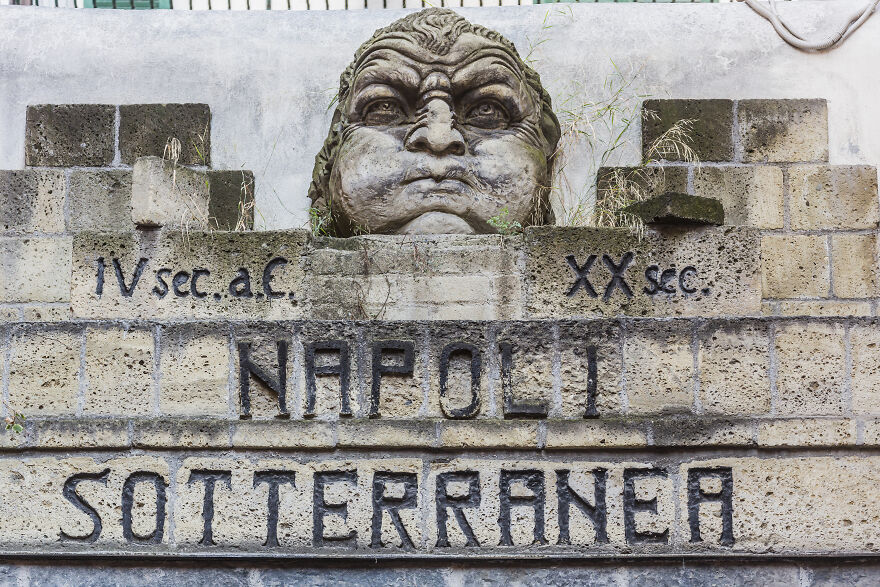
Image credits: Massimo Borchi/Atlantide Phototravel / Getty Images
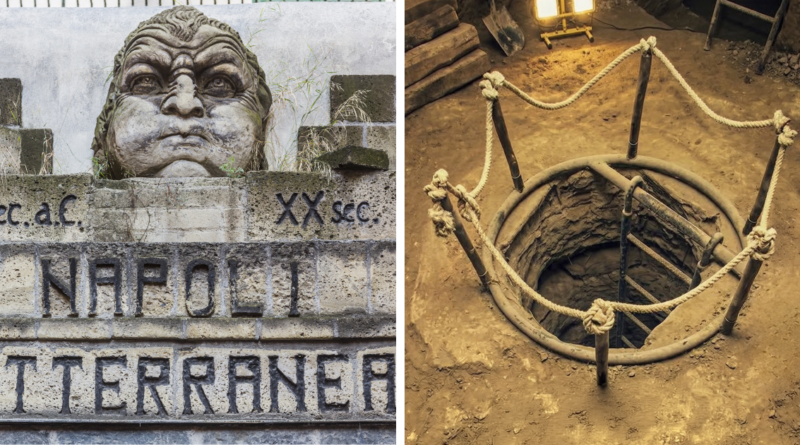
Right underneath the city of Naples lies a mysterious subterranean holding forgotten World War II relics. The legendary Napoli Sotterranea dates back to ancient times, specifically to the third century BC, when the Greeks opened the first underground quarries to extract the tuff blocks needed to establish their Neapolis (per Napoli Sotterranea).
The Romans later added a sewer system and an underground aqueduct to transport water from Serino to the center of Naples (per Naples Insider).
The dark tunnels inside Napoli Sotterranea are barely wide enough for one person to walk through, and the walls are covered with traces of the hydraulic plaster that ancient workers used for its waterproofing properties.
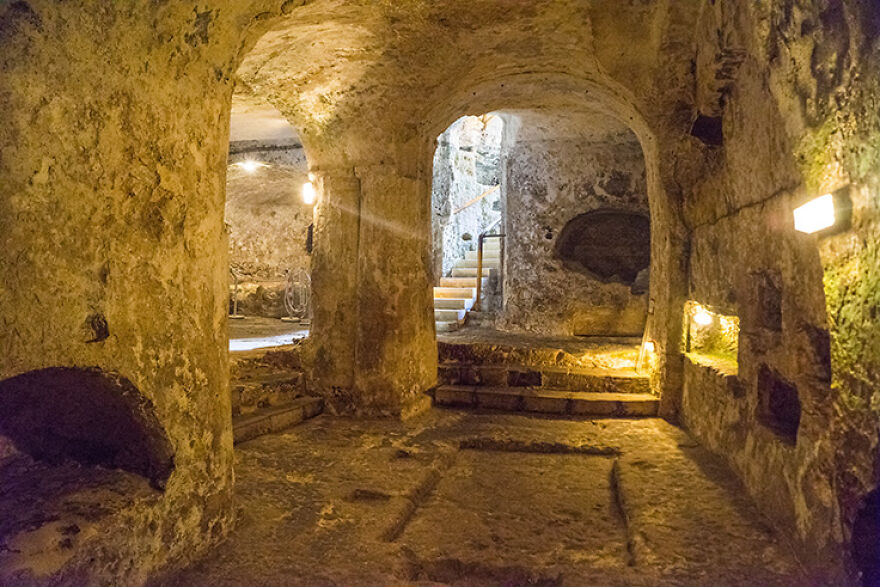
Image credits: Guido Cozzi/Atlantide Phototravel / Getty Images
In the 16th century, the long-established aqueducts and rainwater cisterns could no longer meet Naples’ water needs. By the beginning of the 20th century, the city ceased digging underground for water, abandoning an entire network that spanned 2,000,000 square meters.
The underground routes were later used as air-raid shelters during World War II, serving as a hidden survival bunker amid catastrophic bombings that hit Naples.
Remnants of these harrowing, high-stakes events include furniture, graffiti, and other objects left by dozens of panicked people underground.
Nushabad Underground City (Ouyi), Nushabad, Iran
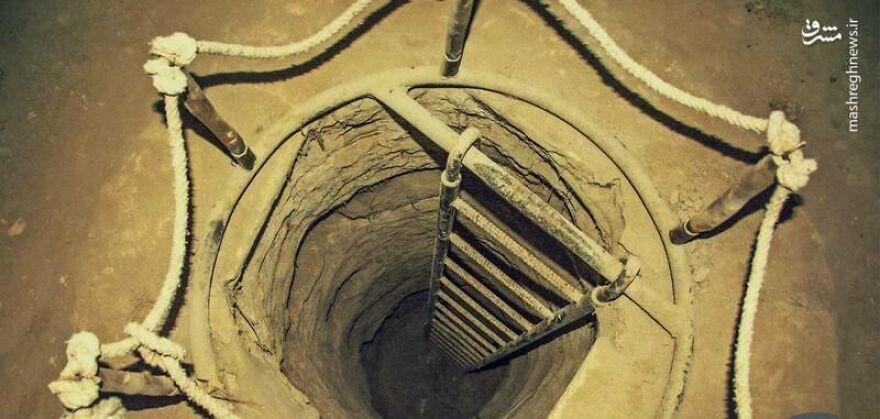
Image credits: Facebook
Located right in the empty Iranian desert is a man-made underground city that dates back to the Sasanian Empire, which ruled the country from 224 to 651 (per ITTO).
Nushabad Underground City, one of the world’s largest underground cities, was discovered by accident when a citizen stumbled upon a weird tunnel while digging a sewage ditch in his house, uncovering a massive, 1500-year-old underground city deep beneath the ground.
Entire families would run for their lives inside the silent subterranean place whenever enemies attack.
When bloodthirsty horsemen entered houses, they only found lingering smell of cooked food, hot stoves, and lit lamps, with not a single person in sight (per WANA).
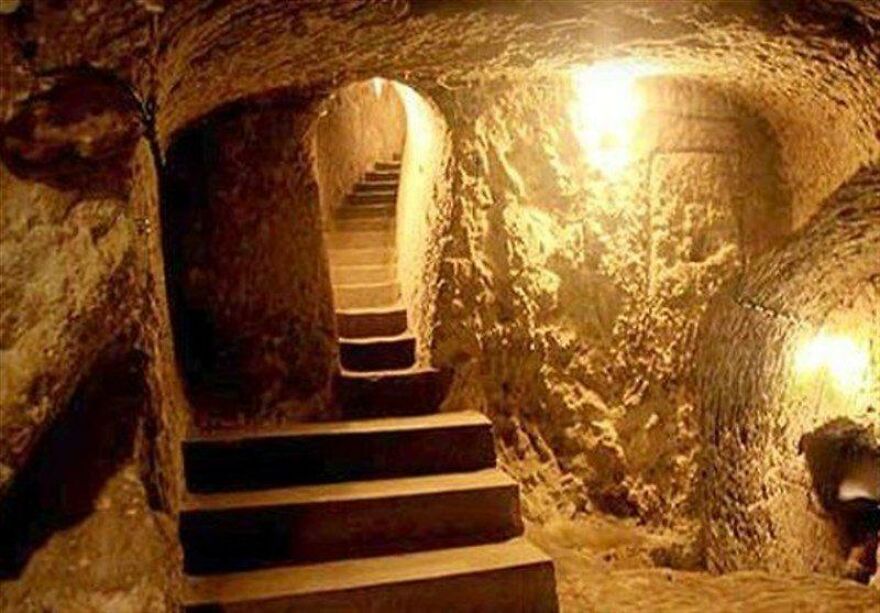
Image credits: Facebook
Citizens of the remarkable city managed to build underground water pipes, toilets, storage spaces, and individual rooms, creating an entire hidden community that served as a shelter from hostile forces.
The three-level city is ingeniously built with a sophisticated network of rooms, halls, and pathways.
Only one person can stand at a time to cross the complicated paths, while others can only be accessed by crawling.
Kaymakli, Cappadocia, Turkey
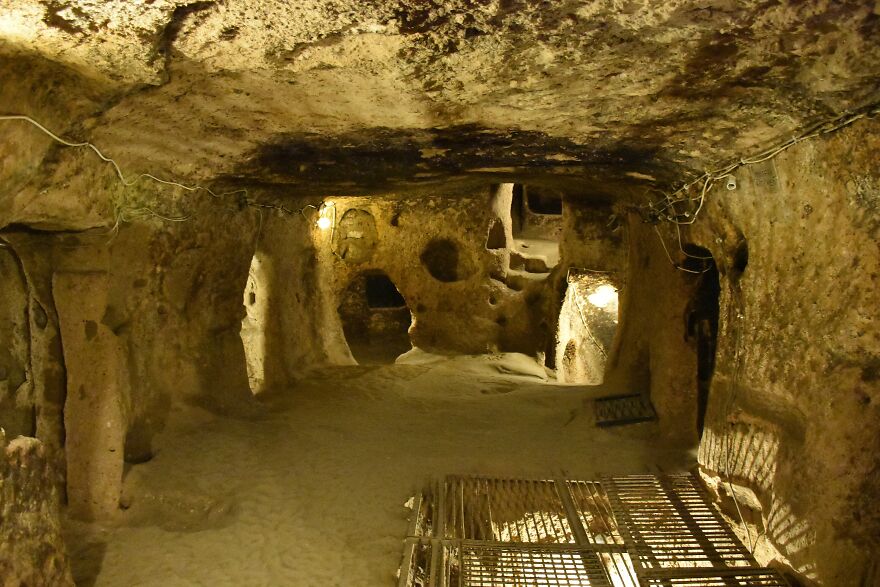
Image credits: wikipedia.org
Deep below central Turkey lies a peculiar city completely dug out of rock. The sprawling underground city — currently a UNESCO World Heritage Site — was built thousands of years before Christ and features a wide array of mysterious mazes, tunnels, and rooms (per History Hit).
Travel author Rick Steves previously descended into Kaymakli in an exclusive coverage on his YouTube channel, taking viewers right into the depths and darkness of the ancient city.
“Much of Kaymakli was originally dug in Hittite times, over 1,000 years before Christ,” he explained.
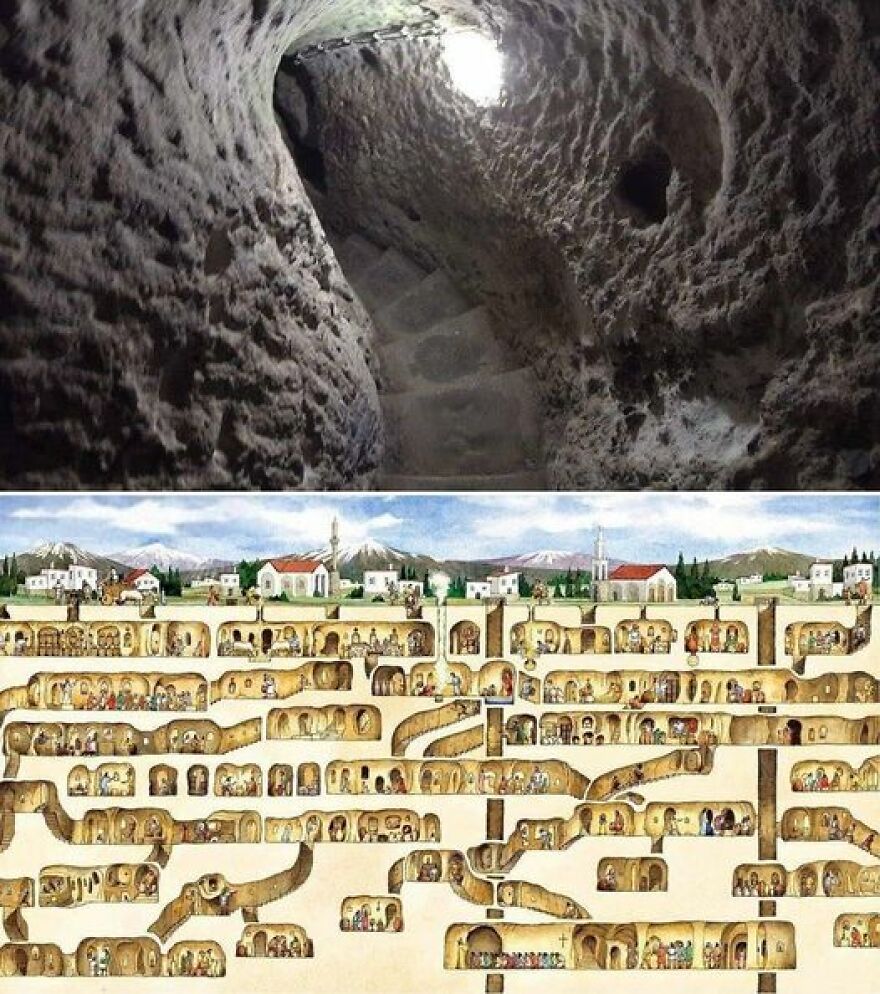
Image credits: Facebook
“Later, this underground world provided an almost ready-made refuge. Through the centuries, when invading armies passed through the area, entire communities lived down here for months at a stretch. In ancient times, Christians were persecuted and actually did go, literally, underground.”
Steve went on to express fascination with how people and their families managed to survive underground in ancient times.
“This is a remarkable example of their determination to live free and true to their faith,” he said, inviting viewers to ponder, “Imagine, 300 AD, hiding out down here with your family. In fact, hiding out down here with your entire community. And people up there hunting you down.”
Burlington Bunker, Corsham, England
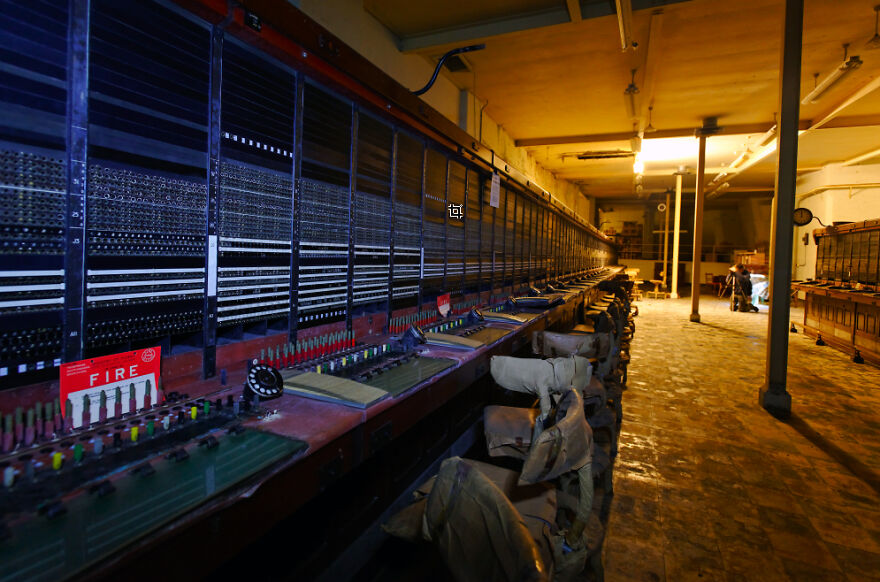
Image credits: wikipedia.org
The British military kept a sprawling 35-acre underground Cold War city concealed for almost five decades, until the long-held secret was finally made public in December 2004.
“A formerly secret Government underground site near Corsham in Wiltshire, which was a potential relocation site for the Government in the event of a nuclear war, was declassified at the end of 2004,” the Ministry of Defence announced on its website (per Business Insider).
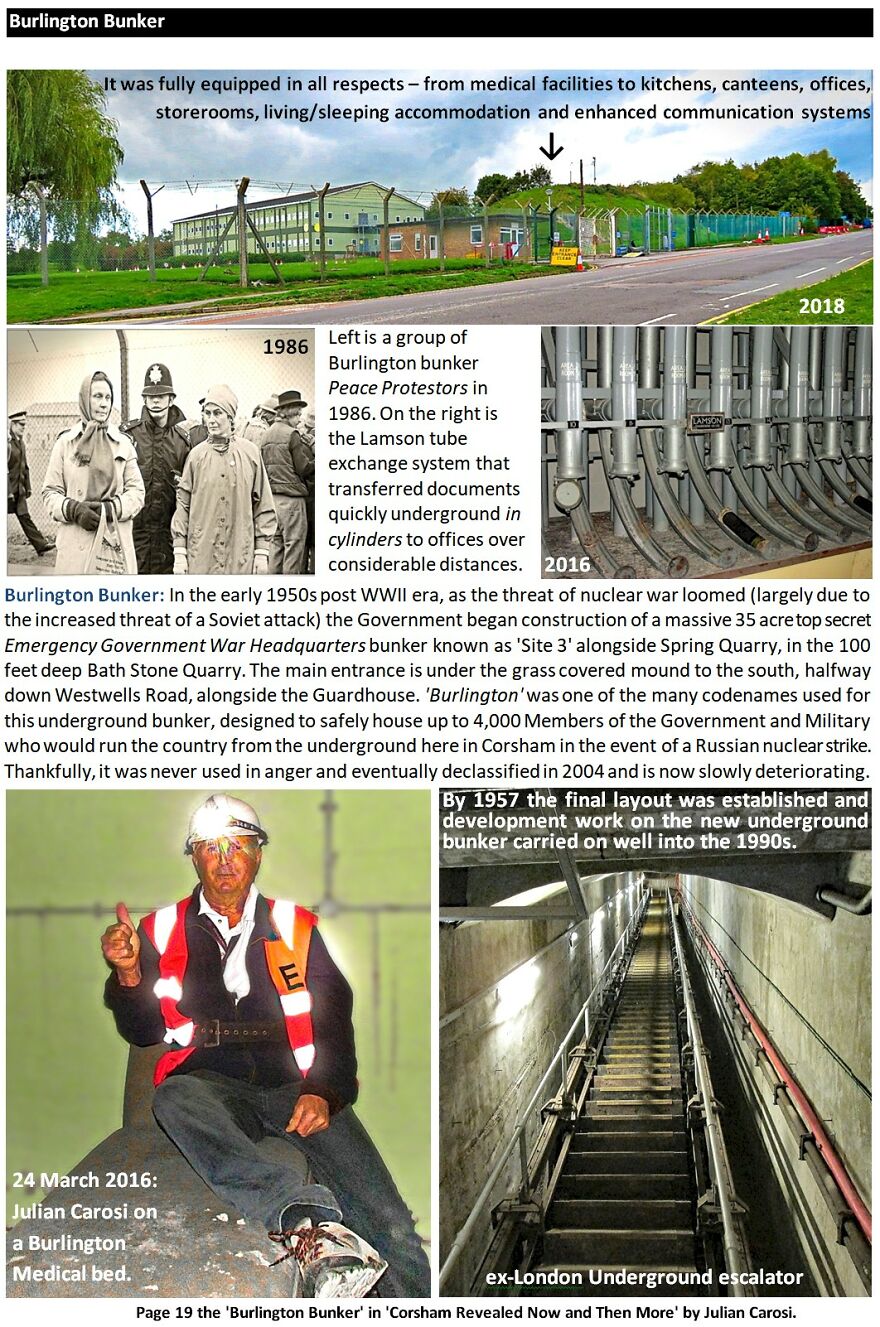
Image credits: Facebook
The top-secret city was constructed in the late 50s to accommodate up to 4,000 central Government personnel — including the Conservative Prime Minister, the entire Cabinet Office, civil servants, domestic support staff, and arguably, the Royal Family — in the event of a deadly nuclear blast (per BBC).
The hidden site lies 100 feet beneath Corsham town, spanning over one kilometre and stretching across more than 60 miles of roads. It is equipped with everything 4,000 government staff would need to survive for three months, from bedrooms and offices to a bakery and hospital.
Strangely enough, the underground building featured a massive telephone switchboard — one of the largest of its kind — and a BBC broadcasting studio.
📢 Gostou da notícia? Compartilhe com os amigos!
Este artigo é uma tradução automática de uma fonte original. Para ler o conteúdo na íntegra: Clique aqui.