
🤯 INCRÍVEL: Natural History Museum Reveals Wildlife Photographer Of The Year 2025 Winners (32 Pics) 😲
Every year, the Natural History Museum’s Wildlife Photographer of the Year turns the natural world into a gallery of split-second miracles by highlighting the moments caught that make you appreciate nature’s beauty once again. The 2025 winning images do exactly that, balancing jaw-dropping beauty with the quieter, heavier truth of what wildlife is up against.
This year’s Grand Title winner is “Ghost Town Visitor” by South African photographer Wim van den Heever, a powerful image showcasing the fleeting nature of human creations. But beyond the overall winner, the collection travels across habitats and moods: intimate portraits, strange behavior, dramatic predator-prey encounters, and fragile ecosystems caught at the edge of change. Some photos are loud and thrilling. Others are quiet enough to hurt. But they all share that same spark, a reminder that the wild isn’t a painted wall decoration. It’s alive, complicated, and constantly adapting to the world we’ve reshaped around it.
As the Wildlife Photographer of the Year 2025 exhibition opens at London’s Natural History Museum, these images land like more than just beautiful photographs. They’re evidence. They’re stories. And they’re a pretty powerful reason to look closer and care more about what we still have time to protect.
Scroll down and let us know which are your favorites.
More info: nhm.ac.uk | Instagram | Facebook | youtube.com
Click here & follow us for more lists, facts, and stories.
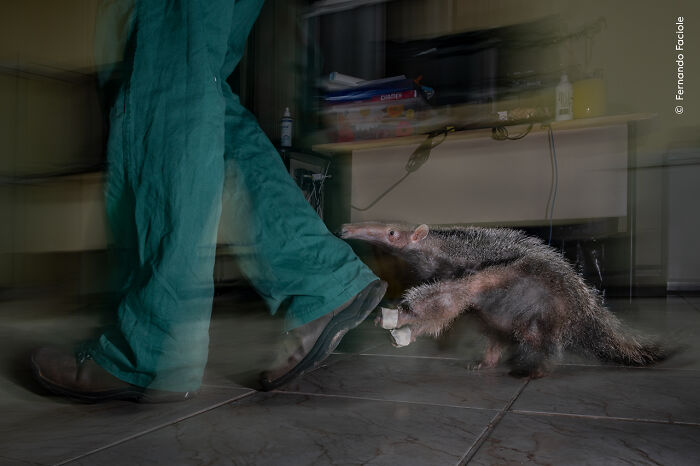
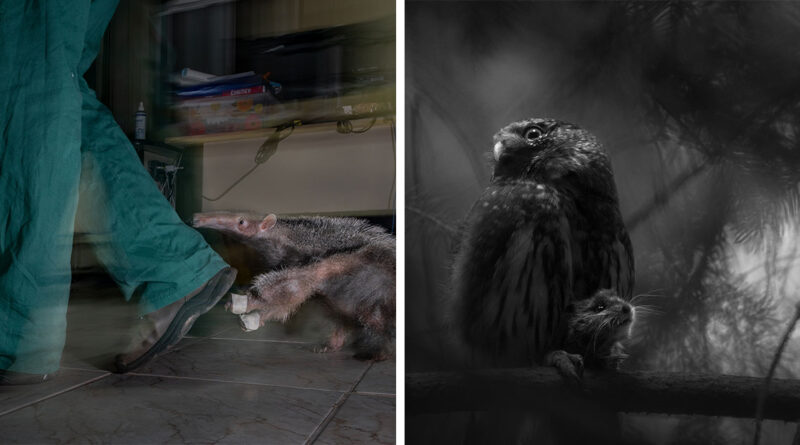
Highly Commended, Photojournalism. Impact Award Winner 2025. Description: “Fernando wanted to highlight the consequences of road collisions, a leading cause of the decline in giant anteater numbers in Brazil. This pup’s mother was killed by a vehicle, and the hope is that it will be released back into the wild after being encouraged to develop crucial survival skills by its caregiver. Alongside rehabilitation centers, the Anteaters and Highways project of the Wild Animal Conservation Institute is developing strategies to reduce anteater deaths on Brazil’s roads. These include erecting fences and building underground tunnels to allow the anteaters to cross safely.” Location: Centro de Triagem de Animais Silvestres (CETAS), Belo Horizonte, Brazil
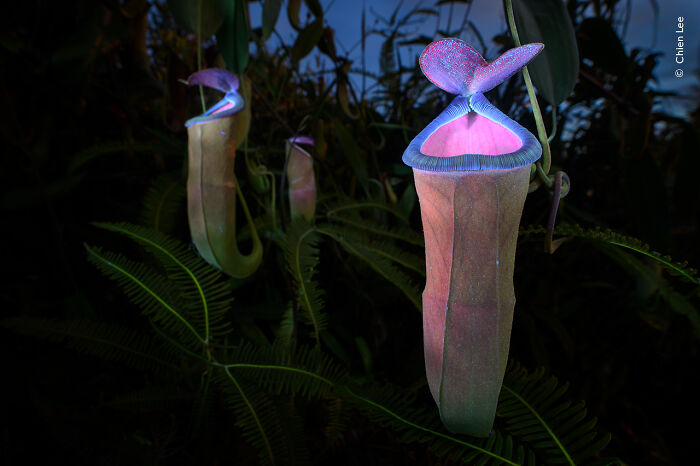
Winner, Plants and Fungi. Description: “Insects can see ultraviolet (UV) light, but humans can’t, so Chien used a long exposure and a UV torch. Waiting until after sunset, he had just a five-minute window before the ambient light illuminating the backdrop disappeared completely. Some carnivorous pitcher plants reflect UV light on certain areas as part of their ‘display’. They use color, scent and nectar to lure their prey into pools of digestive juices at the bottom of their leaves.” Location: Kuching, Sarawak, Borneo, Malaysia
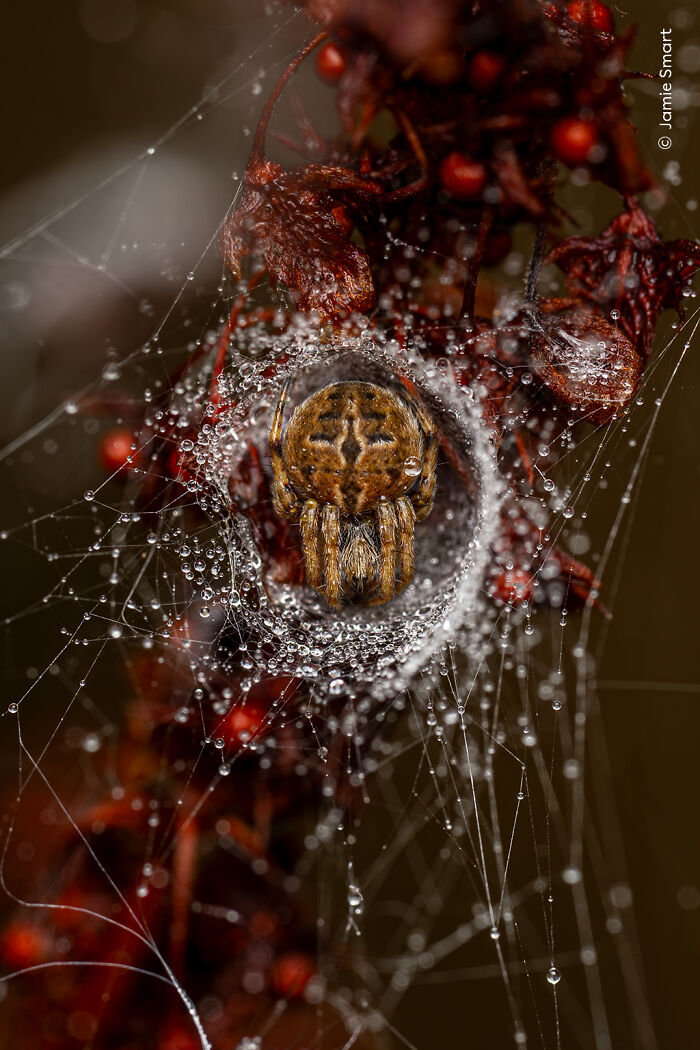
Winner, 10 Years and Under. Description: “Jamie first noticed the dew-laden web before realizing its maker was sitting in a nest. With the patience and steadiness needed to manually focus her camera, she kept the spider perfectly lit and symmetrically framed. This spider’s web is constructed from a scaffold of radial threads, overlaid with a spiral of sticky silk to hold ensnared insects. A strong signal thread transmits vibrations to the spider’s hiding place, triggering it to emerge and collect its prey.” Location: Mid-Wales, UK
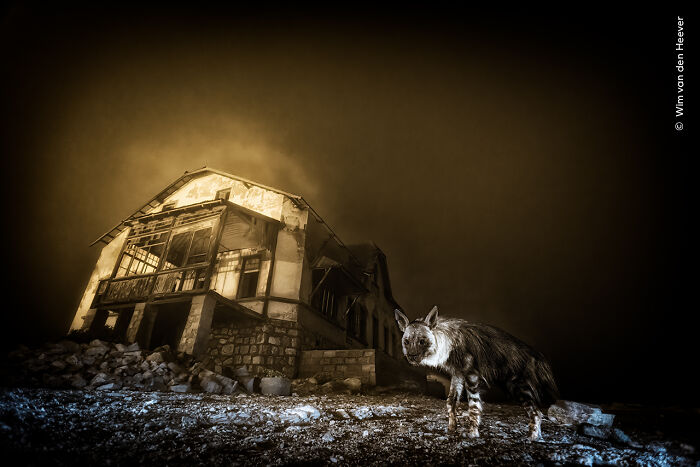
Winner, Urban Wildlife Wildlife. Photographer of the Year 2025. Description: “With sea fog rolling in from the Atlantic Ocean, Wim chose this spot for his camera trap after noticing hyena tracks nearby. ‘It took me 10 years to finally get this one single image of a brown hyena, in the most perfect frame imaginable.’ The rarest hyena species in the world, brown hyenas are nocturnal and mostly solitary. They are known to pass through Kolmanskop on their way to hunt Cape fur seal pups or scavenge for carrion washed ashore along the Namib Desert coast.” Location: Kolmanskop, near Lüderitz, Namibia
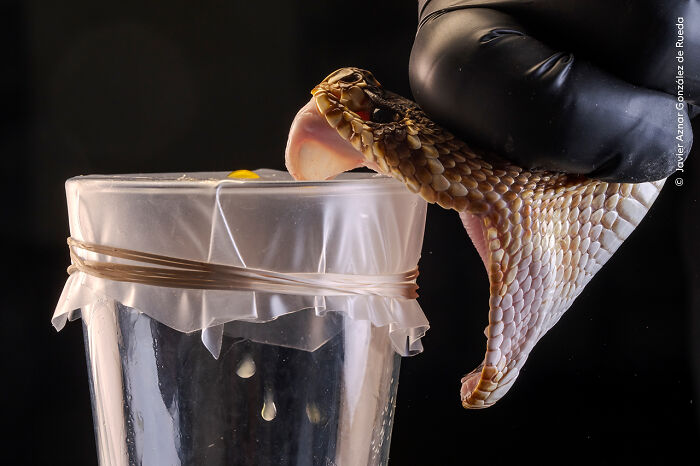
Winner, Photojournalist Story Award. Description: “Javier highlights another side of the story: the importance of snakes to human health. Drops of deadly venom drip into a glass as an eastern diamondback rattlesnake is milked. The venom is used to produce antivenom and has the potential to treat certain medical conditions, such as chronic nerve pain.” Location: USA
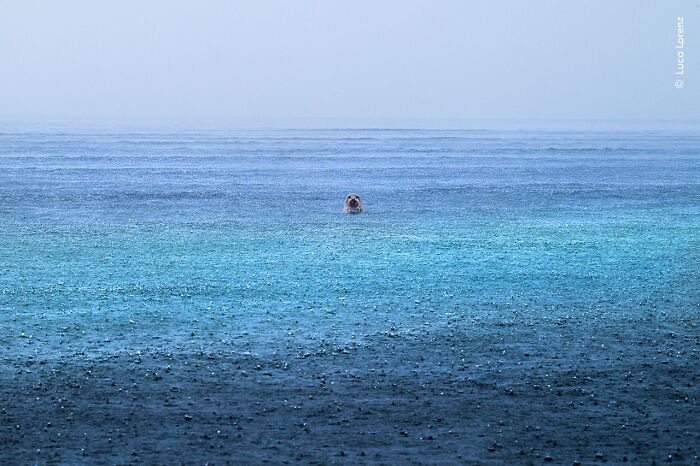
Winner, Rising Star Award. Description: “When the heavens opened, Luca was out with his camera. He minimized the lens aperture to ensure the full expanse of the sea was in focus and framed an inquisitive harbor seal enjoying the patter of the rain.”
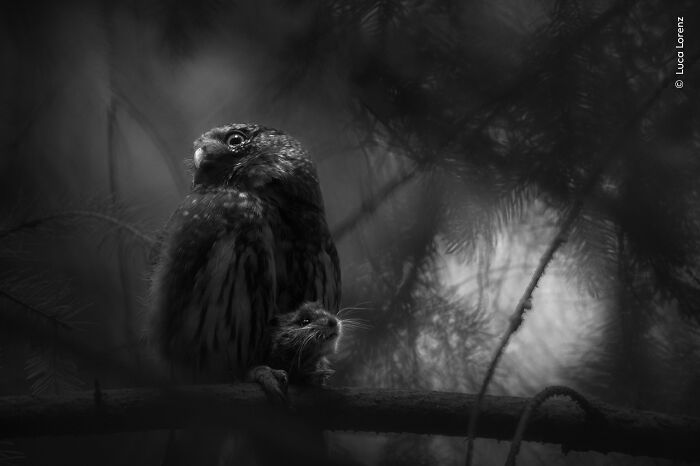
Winner, Rising Star Award. Description: “Luca had been watching a tree hole where this Eurasian pygmy owl and its mate were nesting. When one disappeared, the other continued feeding the chicks. On this day, the remaining bird returned clutching the chicks’ breakfast in its claws, and called for its mate, but there was no reply.”
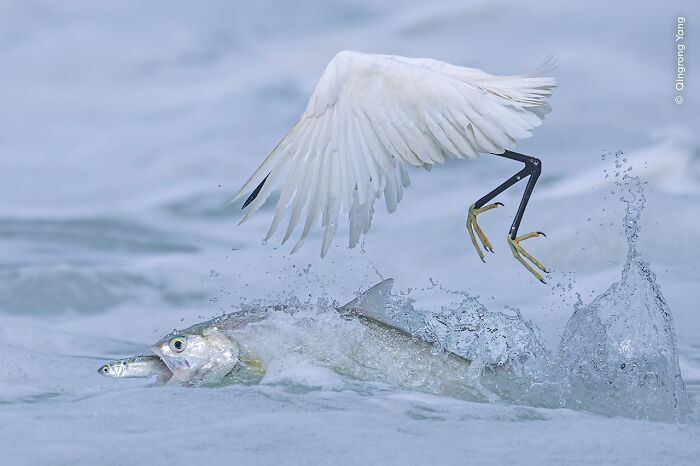
Winner, Behavior: Birds. Description: “Qingrong was at Yundang Lake near his home, a place he visits regularly to photograph the feeding frenzies: little egrets patrol the surface, ready to pounce on fish leaping to escape underwater predators. Once a natural marine harbor, Yundang Lake was sealed off from the sea during 1970s development. Isolated from the tides and currents, it became polluted and stagnant. An engineering project later reconnected it to the sea via a system of gates that regulate water flow.” Location: Yundang Lake, Fujian Province, China
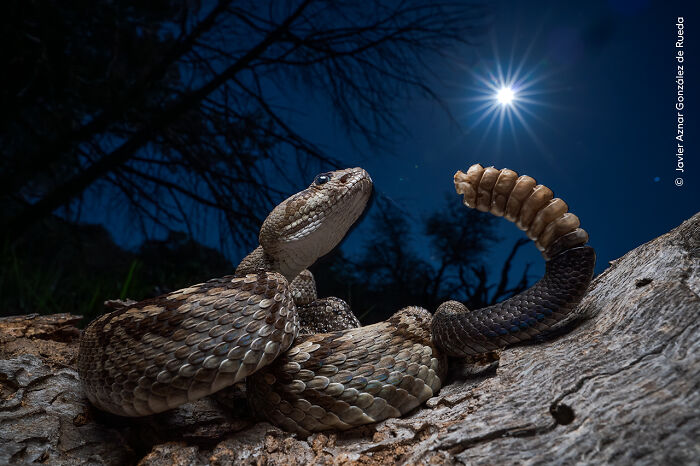
Winner, Photojournalist Story Award. Description: “Despite their fearsome reputation, rattlesnakes don’t seek out humans to attack. This black-tailed rattlesnake was spotted on the road at night outside Fort Davis, Texas. In this instance, its tail is raised and rattling in response to the perceived threat of the snake handler who rescued it from the road.” Location: USA
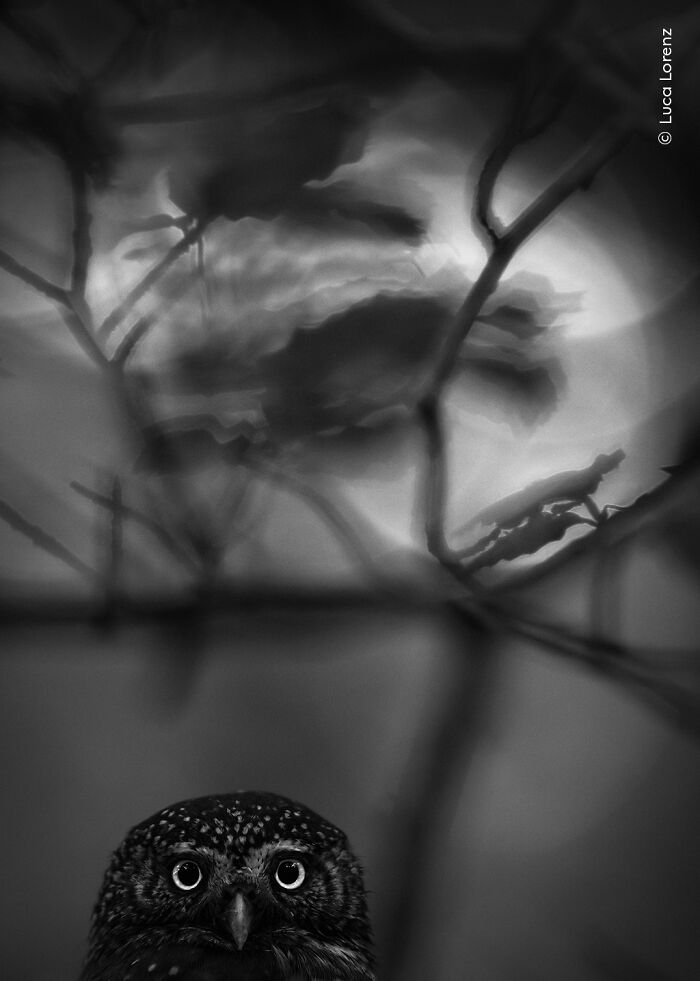
Winner, Rising Star Award. Description: “This tiny, secretive Eurasian pygmy owl hunts using both sight and sound, striking silently. This unusual black-and-white composition makes the most of the background silhouettes, which Luca felt suited a bird that lives among the shadows.”
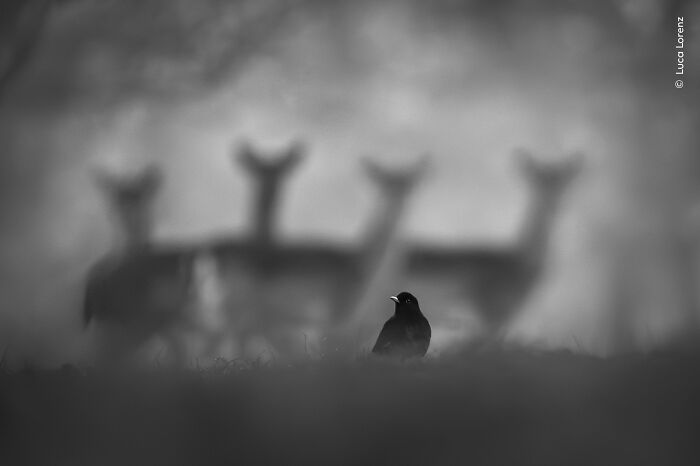
Winner, Rising Star Award. Description: “Luca was lying flat on the dewy grass for a better perspective of one of the park’s ubiquitous blackbirds when four deer emerged from the mist and stopped to assess the situation. Time stood still and he caught the moment.”
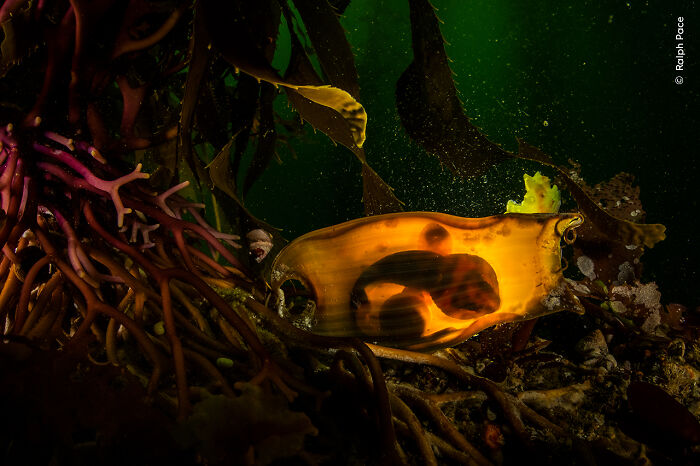
Winner, Underwater. Description: “Faced with strong currents pushing him from side to side, Ralph struggled to keep steady to photograph this egg case, or ‘mermaid’s purse’. He lit the case from behind to reveal the swell shark embryo within, its gill slits and yolk sac clearly visible among the dark kelp forest. Researchers estimate that kelp forests in Monterey Bay have declined by more than 95 per cent over the past 34 years. Swell sharks depend on kelp to lay their leathery eggs, making them especially vulnerable to such losses.” Location: Monterey Bay, California, USA
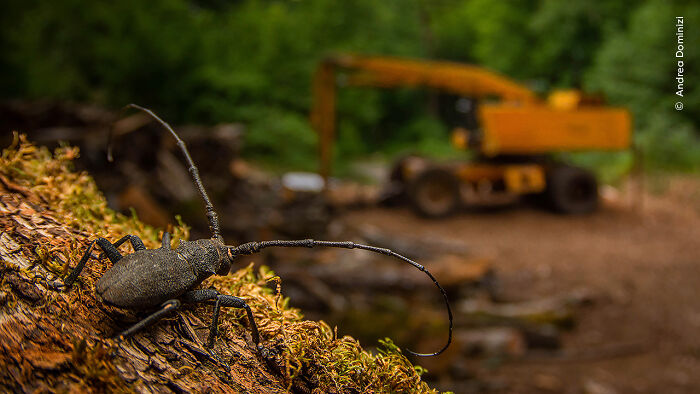
Winner, 15 – 17 Years. Young Wildlife Photographer of the Year 2025. “Andrea noticed this longhorn beetle while walking in the Lepini Mountains of central Italy, in an area once logged for old beech trees. Using a wide-angle lens and off-camera flash, he framed the beetle against abandoned machinery. Andrea’s photograph tells a poignant story of habitat loss. As longhorn beetles tunnel into dead wood, fungi make their way inside, helping to break it down and recycle nutrients. If the beetles’ habitat is disturbed or destroyed, the effects ripple across the entire ecosystem.” Location: Lepini Mountains, Lazio, Italy
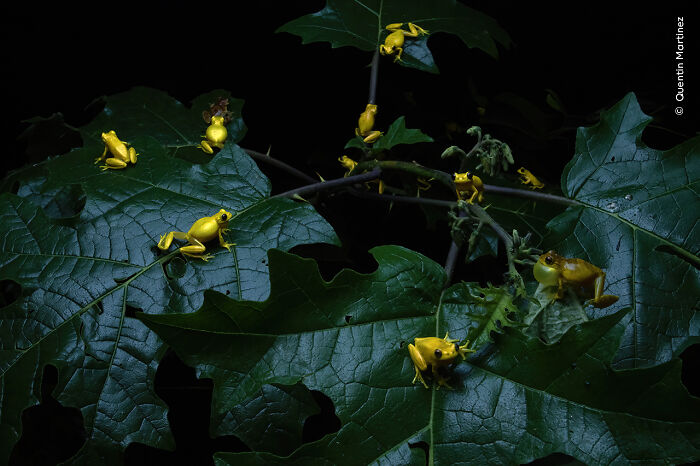
Winner, Behavior: Amphibians and Reptiles. Description: “In persistent rain, Quentin followed a flooded path to a temporary pool in a forest clearing. He framed this scene with a wide-angle lens and used a diffused flash, which didn’t disturb the frogs, to highlight their metallic sheen. To attract mates, lesser tree frogs produce short, shrill calls. Huge numbers gather, and the spectacular breeding event – triggered by heavy rains – lasts for just a few hours.” Location: Kaw Mountain, French Guiana
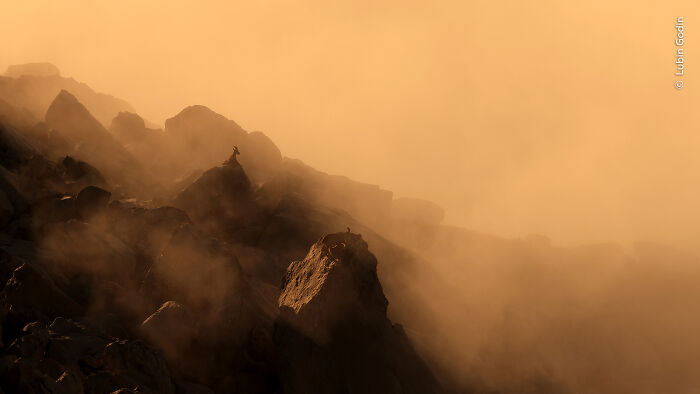
Winner, 11–14 Years. Description: “Lubin spotted the Alpine ibex resting above a sea of clouds during an early morning ascent. As the mist rose and the sun broke over the crags, he retraced his steps to capture this ethereal moment before fog thickened and the light faded. Native to Europe, the species was hunted close to extinction in the early 1800s. Thanks to protection and reintroduction efforts, ibex now roam large areas of the Alps. However, a rapidly changing climate causing shifts in food availability during breeding seasons may hinder their survival.” Location: Col de la Colombière, Haute-Savoie, France
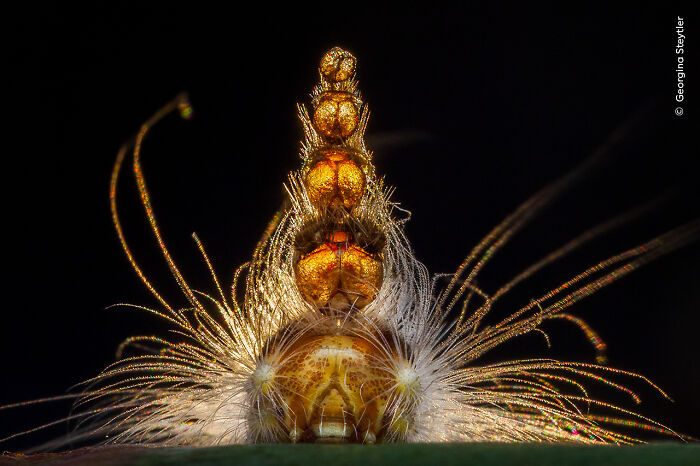
Winner, Behavior: Invertebrates. Description: “Georgina had been looking out for this caterpillar for years when she noticed eucalyptus trees bearing skeletonized leaves, telltale signs that the animal had been grazing. She took this image backlit by the setting sun, using a fill-in flash to illuminate the living head at the base of the stack. This caterpillar’s unusual headgear is made up of old head capsules, each retained with every molt. The resulting tower is believed to help deflect attacks by predators.” Location: Torndirrup National Park, Western Australia, Australia
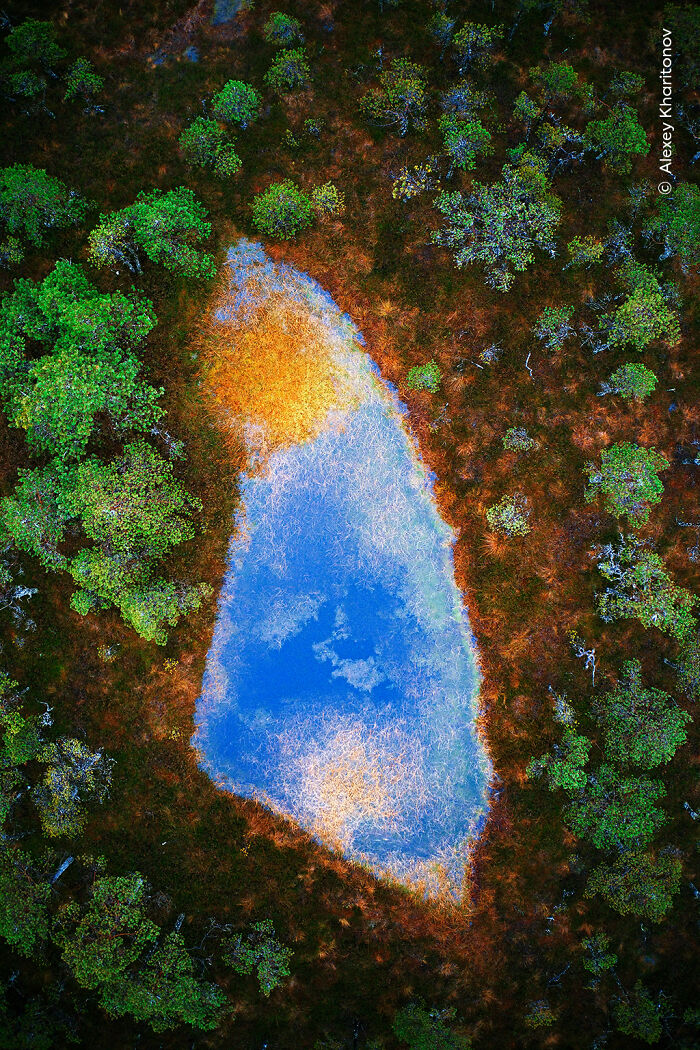
Winner, Portfolio Award. Description: “In the grey November twilight, Alexey flew his drone one last time over Bolshoe Znamenskoe Swamp before heading home. His reward was a sudden break in the clouds: a fragment of blue reflected in a small lake, surrounded by trees, and a grassy knoll posing as the sun.”
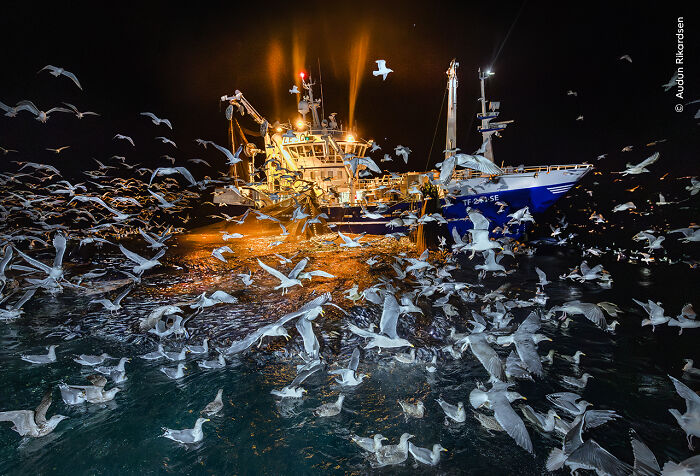
Winner, Oceans: The Bigger Picture. Description: “Audun managed to photograph this chaotic scene of gulls attempting to catch fish trapped by nets. The gulls have learnt to follow the sound of the boats to find a herring feast. Through his work, Audun aims to draw attention to the ongoing conflict between seabirds and the fishing industry. Unfortunately, many birds drown in or around these purse seine nets each year. Various fisheries and researchers are trialling solutions, including sinking the nets more quickly to make them less accessible to the birds.” Location: Kvænangen Fjord, Skjervøy, Norway
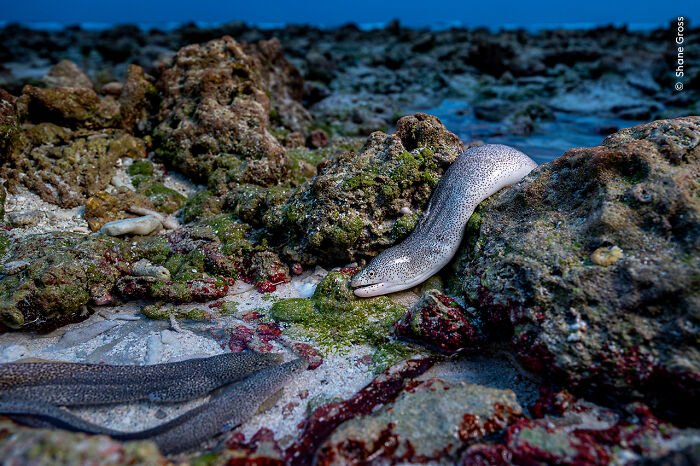
Winner, Animals in their Environment. Description: “It took Shane numerous attempts over several weeks to document this rarely photographed behavior. At first the eels were elusive, but once Shane realized that they were scavenging for dead fish, he waited. His patience was soon rewarded when these three eels appeared. Peppered moray eels are well adapted to the intertidal zone. They can hunt both above and below the water’s surface using their keen senses of smell and sight, sometimes staying out of water for more than 30 seconds.” Location: D’Arros Island, Amirante, Seychelles
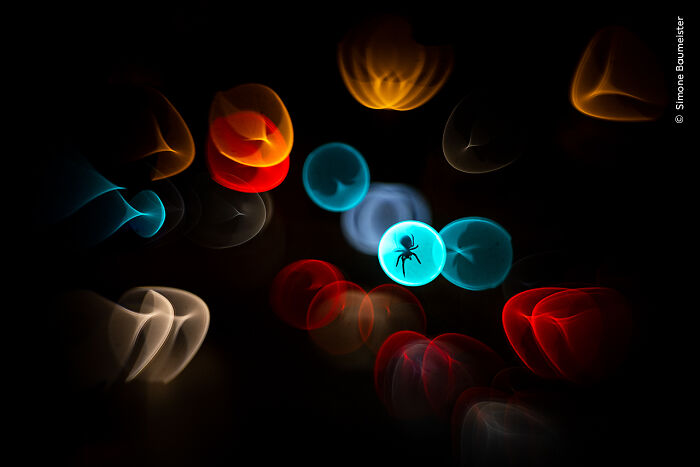
Winner, Natural Artistry Description: “To achieve this kaleidoscopic effect, Simone reversed one of the six glass elements in an analogue lens. This distorted the image at the edges while leaving the center sharply focused. She then cropped the picture to move the spider slightly off-center. In urban environments, orb weaver spiders often spin webs near artificial lights that attract insects at night. The web acts as an extension of their sense organ, gathering sound and transmitting vibrations, including those of prey, to their legs.“ Location: Ibbenbüren, North Rhine-Westphalia, Germany
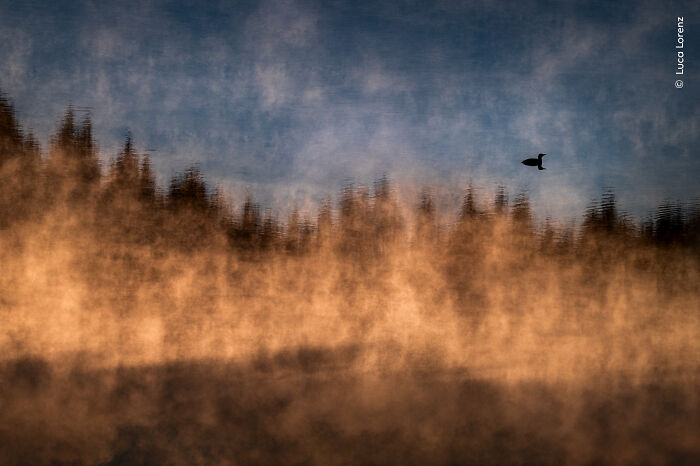
Winner, Rising Star Award. Description: “Luca arrived early as dawn broke, ensuring he didn’t miss the first rays of sunlight on the water. He heard the red-throated divers before he saw them. Later, he rotated his original image 180 degrees to bring the mirrored pines and spruces into an upright position.”
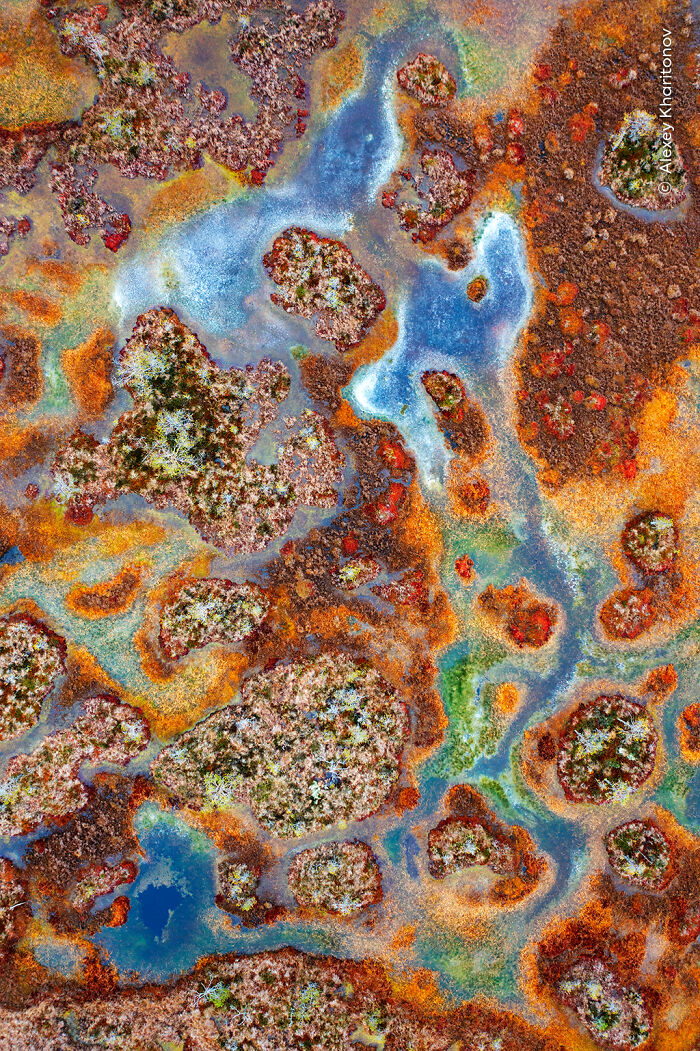
Winner, Portfolio Award. Description: “A kaleidoscope of colors carpets Mukhinskoye Swamp under a grey sky. Blue lakes and channels fringed with white ice contrast with green and yellow grasses and widespread sphagnum mosses, which turn vibrant orange and red during the brief autumn.”
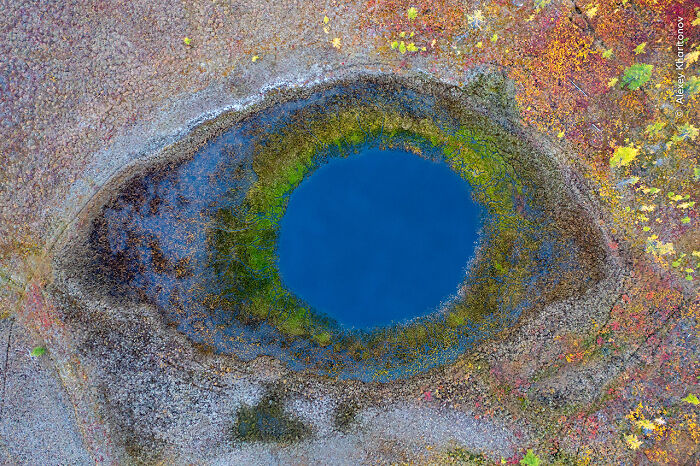
Winner, Portfolio Award. Description: “When ice-rich permafrost below ground thaws, it can create a striking thermokarst landscape where the ground sinks and forms large surface depressions. These depressions can develop into swampy bodies of water called thermokarst lakes – like this 30-metre-wide (100-foot) one Alexey discovered.”
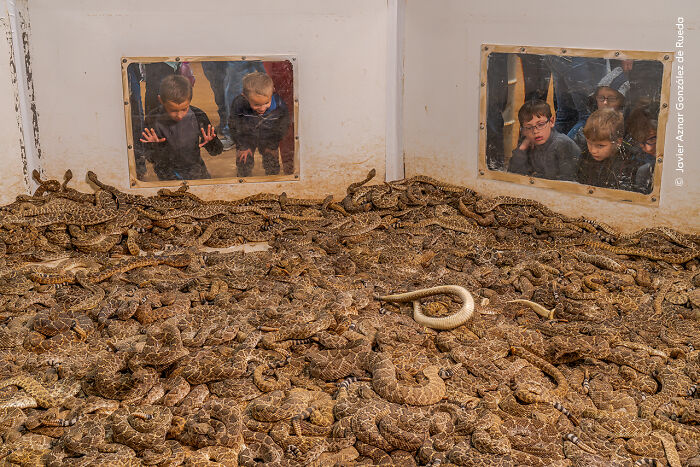
Winner, Photojournalist Story Award. Description: “Visitors gaze at hundreds of western diamondback rattlesnakes at the annual rattlesnake round-up in Sweetwater, Texas. Many of these snakes will be k***** and sold for their skin and meat. Round-ups can harm other animals too: snakes are often driven from their rock shelters using petrol fumes, which also affect any creatures sheltering alongside them.” Location: USA
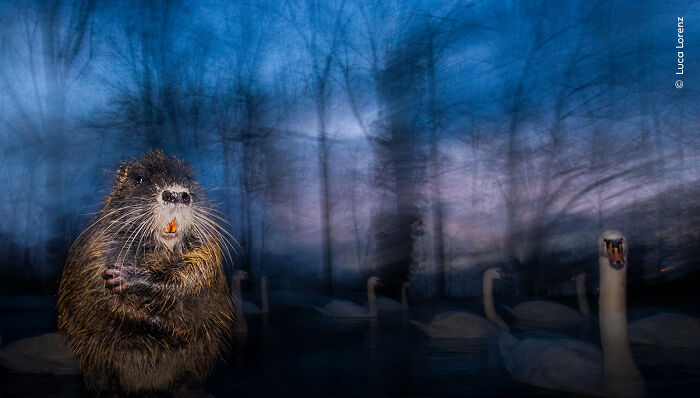
Winner, Rising Star. Description: “Luca was photographing mute swans on an urban lake one evening when a coypu, a rodent introduced from South America, appeared in the frame. Having been shipped across the world for the fur trade, coypu have since established many feral populations.” Location: Germany
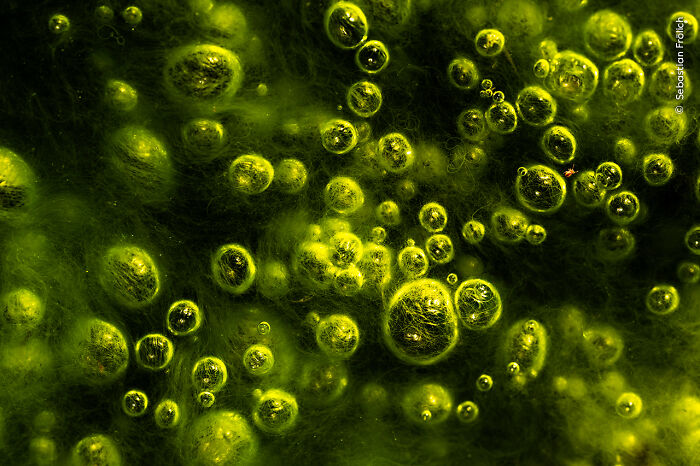
Winner, Wetlands: The Bigger Picture. Description: “Sebastian visited this fragile wetland ecosystem to highlight its importance as a vast store of carbon dioxide and as a habitat for diverse wildlife. A tiny springtail ran across escaping gas bubbles rising through the algae, giving this image a sense of scale. Austria has lost 90 per cent of its peat bogs, and only 10 per cent of those that remain are in good condition. Platzertal is one of the last intact high moorlands in the Austrian Alps, and an area renowned for its carbon-storing peat bogs.” Location: Platzertal, Tyrol, Austria
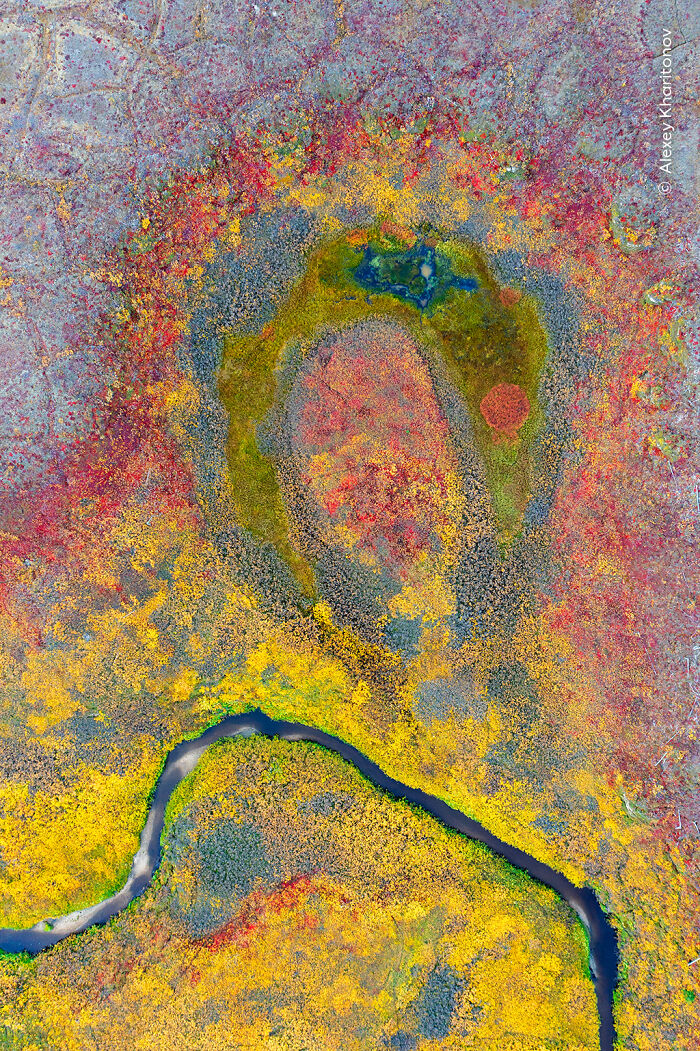
Winner, Portfolio Award. Description: “Alexey took what may be the first drone photographs of this remote landscape during a 180-kilometre (112-mile) motorboat trip through uninhabited territory along the Taymylyr River. Waterways edged with bright green grass gave way to golden shrubs and a landscape sprinkled with the crimson blaze of alpine bearberry and bog blueberry.”
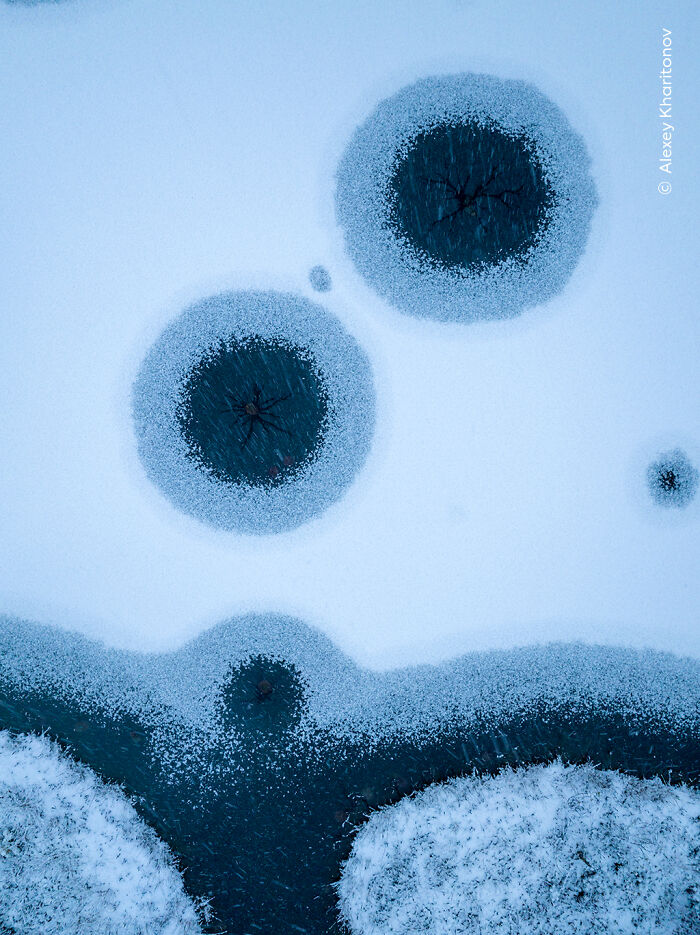
Winner, Portfolio Award. Description: “This lake, nestled in the marshes of Svetlyachkovskoye Swamp in northwestern Russia, had recently frozen over, its surface dusted with freshly fallen snow. As patches began to melt, spider-like cracks crept across dark, snow-free circles.”
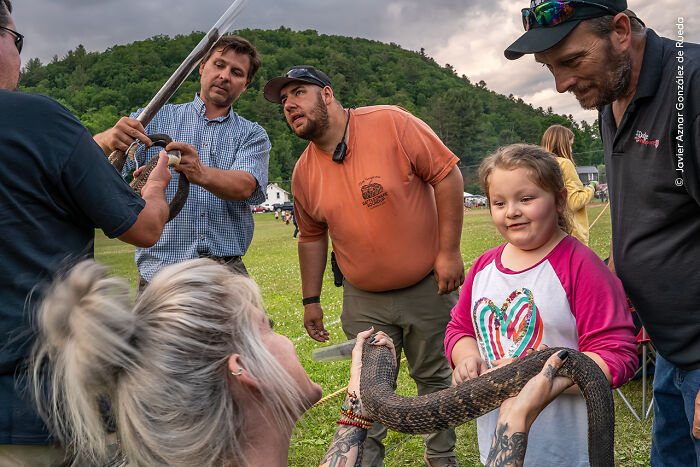
Winner, Photojournalist Story Award. Description: “This Pennsylvanian festival celebrates the importance of rattlesnakes to the ecosystem. Organizers advocate for any captured snakes to be returned to the wild, although it’s up to the hunters to decide what they do.” Location: USA
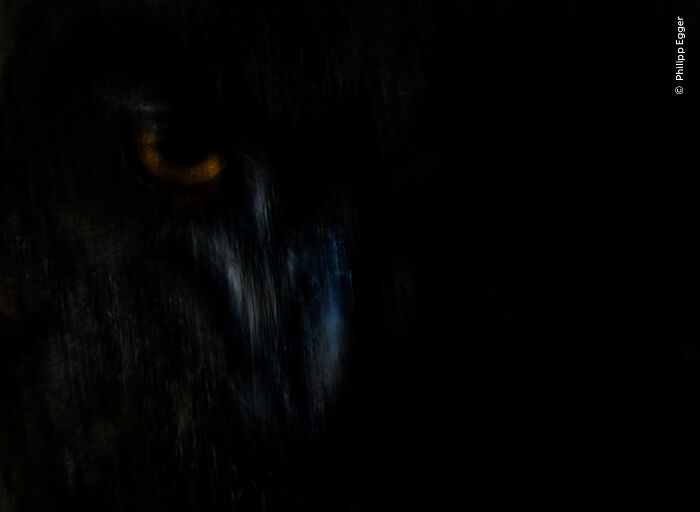
Winner, Animal Portraits. Description: “Philipp first saw this nest while climbing and spent four years observing it from a distance. He planned this image meticulously, right down to the slight camera wobble to blur the few elements present, using a telephoto lens. About twice the weight of a buzzard and with a wingspan approaching 180 centimeters (6 feet), these formidable nocturnal predators are among the largest owls. They nest on sheltered cliff ledges or in crevices, often returning to the same site for years.” Location: Naturns, South Tyrol, Italy
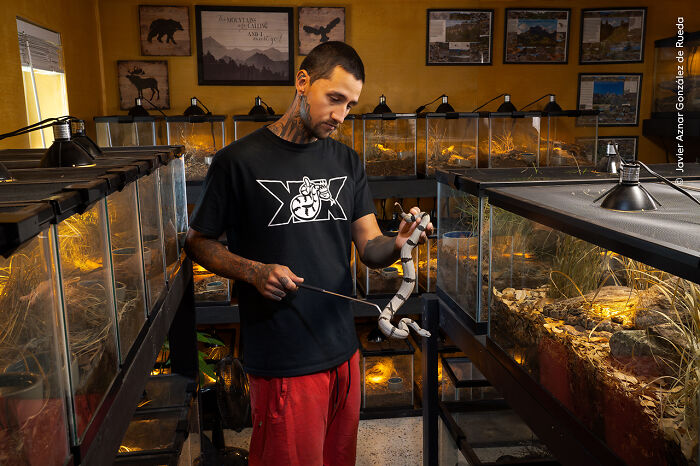
Winner, Photojournalist Story Award. Description: “Kyle Vargas has a passion for rattlesnakes. He collects under permit and keeps them in enclosures stocked with plants, soil and wood from their native habitats. Collecting and keeping rattlesnakes isn’t permitted in every US state, however, as it can pose a threat to many snake species.” Location: USA
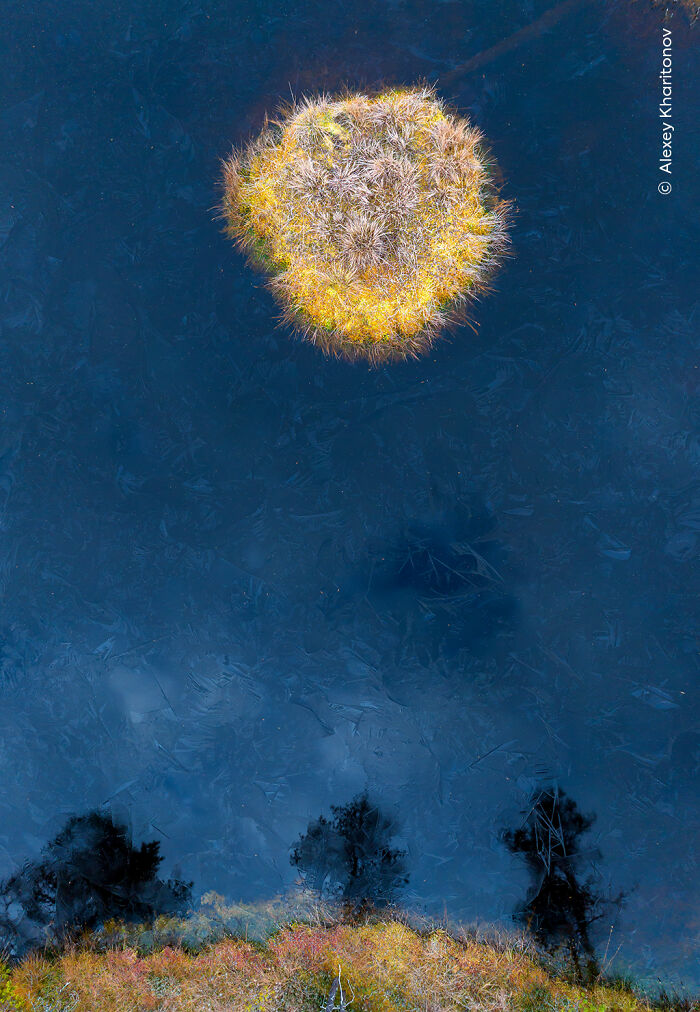
Winner, Portfolio Award. Description: “Alexey launched his drone from a narrow strip of land between a mosaic of small lakes. He framed his picture around a dry, grassy mound encircled by ice, reflected pine silhouettes, and the autumn glow of sphagnum moss.”
You might also like: 50 ‘Weird Facts’ About The World That Might Give You A Fresh Perspective
📢 Gostou da notícia? Compartilhe com os amigos!
Este artigo é uma tradução automática de uma fonte original. Para ler o conteúdo na íntegra: Clique aqui.