

🤯 INCRÍVEL: People Have Mixed Reactions To Dave Ramsey’s Take On Kids Expecting Inheritance 😲
It’s almost the norm in society that if you have children, you’ll leave your money to them one day. But one of the world’s top financial advisors believes this shouldn’t always be the case.
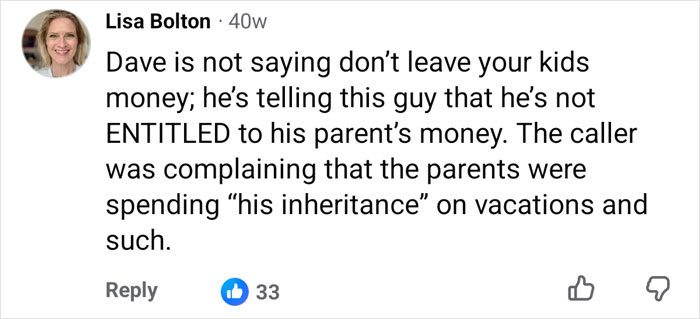
Dave Ramsey says that parents are not obligated to pass on their wealth to their kids. He was responding to a caller who complained about his parents spending his inheritance on things like travel. Ramsey didn’t mince his words when he told the guy that he’s not entitled to money just because he “hit the DNA lottery.” The video has since gone viral, sparking a huge debate, with both parents and adult kids weighing in.
It’s almost a given that parents will leave their money to their kids one day

Image credits: Freepik (not the actual photo)
But Dave Ramsey says this needs to change, especially if your hard-earned cash is going to fund bad behavior
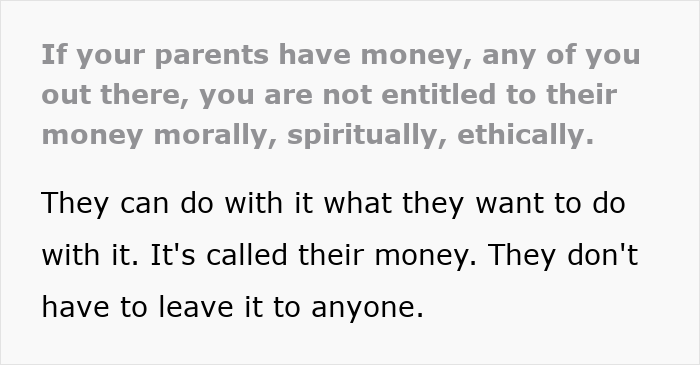
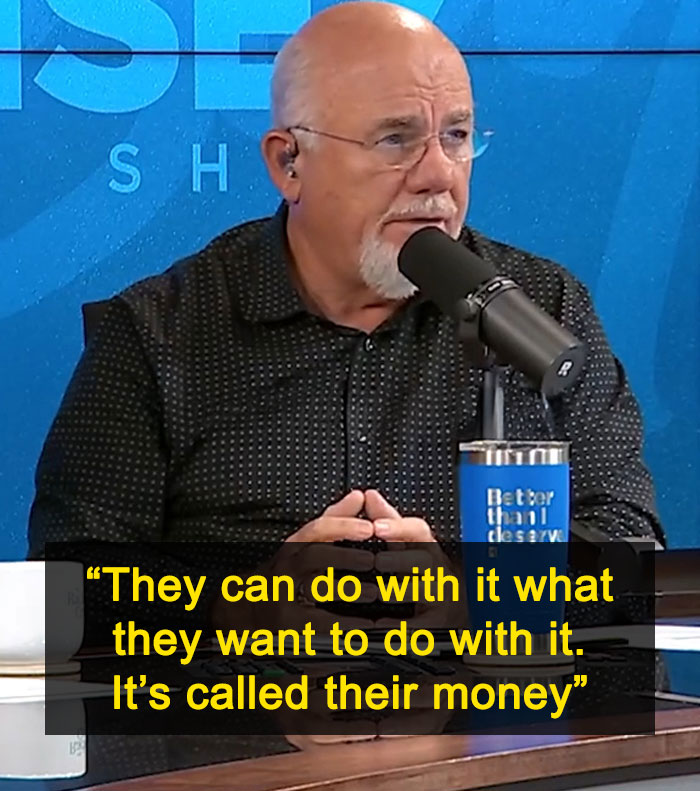
Image credits: Dave Ramsey

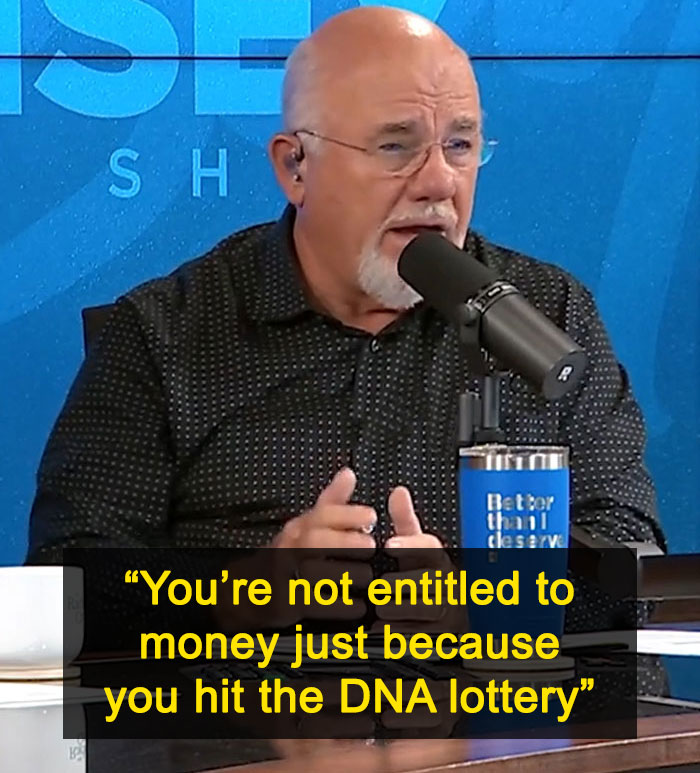
Image credits: Dave Ramsey


Image credits: kaboompics / Pexels (not the actual photo)
Image credits: Dave Ramsey
You can watch the video here:
@daveramsey You aren’t obligated to leave your money to your kids. At the same time, I think it’s wrong to assume that leaving them your money will damage them in some way. Wealth always magnifies the character of the person holding it. That includes both their positive and negative traits. The Bible tells us that a good man leaves an inheritance to his children’s children (Proverbs 13:22). But at the same time, you don’t want your hard-earned money going to fund misbehavior. If you’re a parent, one of your jobs is to raise kids who grow into adults with the morals and character to manage money wisely. If you do your job well, then the inheritance you do leave them will truly be a blessing. #moneytok#inheritance#moneyadvice♬ original sound – Dave Ramsey

Image credits: kaboompics / Pexels (not the actual photo)
“How you spend your money and to whom you leave it is up to you”: other financial experts weigh in
It seems Ramsey isn’t the only expert who believes that adult children aren’t entitled to their parents’ wealth. “How you spend your money and to whom you leave it is up to you,” say investment, corporate, and accounting professional Thomas Brock, and financial writer Anna Baluch.
Yet most parents, who are able to, do leave property and money to their children once they pass away. According to a survey conducted by the Federal Reserve, between 2016 and 2019, the average inheritance received in the U.S. was $46,200. Of course, things are completely different when it comes to wealthy families vs those with less than.
“The average for the wealthiest 1% of individuals surveyed was $719,000, while the average for the bottom 50% was only $9,700,” reports Annuity.org.
Interestingly, inherited wealth has accounted for roughly 50% to 60% of total U.S. private wealth since the early 1900s. That’s according to data from the Organization for Economic Cooperation and Development (OECD).
The experts say that if you are planning to leave an inheritance to your kids, you should think about and plan it carefully. The first step is to determine how much money you want to give your heirs.
“This entails segregating your retirement savings from the assets you can afford to bequeath,” explain Brock and Baluch.
But they warn that parents should be conservative. “Hold on to enough money to avoid the risk of outliving your savings, which is known as longevity risk,” the experts advise, adding that this very real threat for retirees especially with rising health care costs and other inflationary pressures. “Don’t overextend yourself because of a desire to be generous,” they caution.
Like Ramsey, Brock and Baluch believe that each child should be taken on their merits, it’s important to have an idea of their spending habits before leaving them a lump sum of money.
“Before giving an heir $1 million dollars or even $50,000, make sure they won’t spend it without some thought and planning,” they advise. The experts suggest doing a test run by giving your child a few thousand dollars, then observing what they do with it. Do they invest it, spend it, or pay off debt?
“If the heir uses the money wisely, you could bequeath the full amount of the inheritance outright,” they say. “However, if you doubt the heir’s judgment, you may choose to place the money in a trust or purchase a single-premium deferred annuity in their name.”
Of course, not everyone is able to just give away a few thousand. You could also get an idea of how financially responsible your child is by asking a few questions: Do they spend money on a whim? Do they rely on debt? Do they have a stable job? Do they stick to a budget each month? Do they have money set aside for emergencies? Do they invest for the future?
Many adult children do feel entitled to their parents’ wealth, and that’s why the experts say it’s important to manage expectations while you’re still alive.
“You don’t have to explicitly disclose what you’re giving to each individual and how much you’re giving to charitable organizations,” explain Brock and Baluch. “Clear communication can eliminate confusion and hostility between loved ones after you’re gone.”
They add that if you have decided to leave an inheritance to multiple heirs and the amounts differ, you may want to provide them with some rationale. “Offering some insight into your decision can go a long way,” they say.
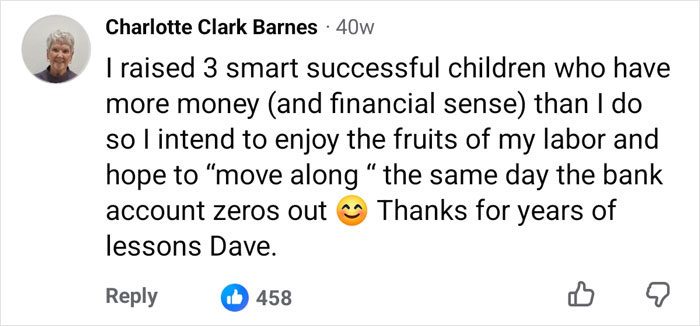
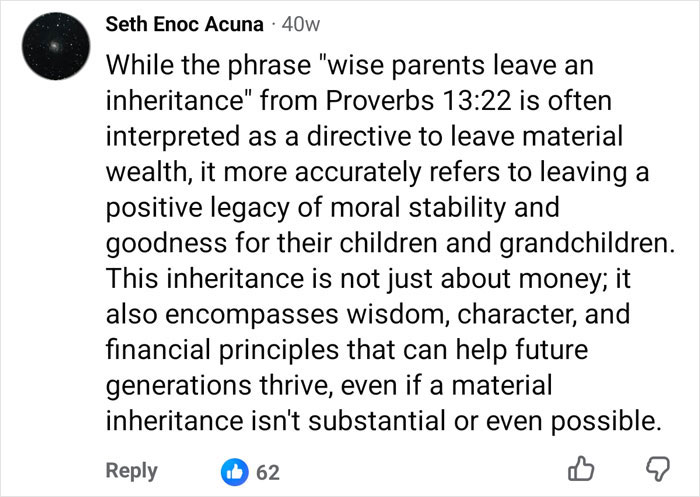
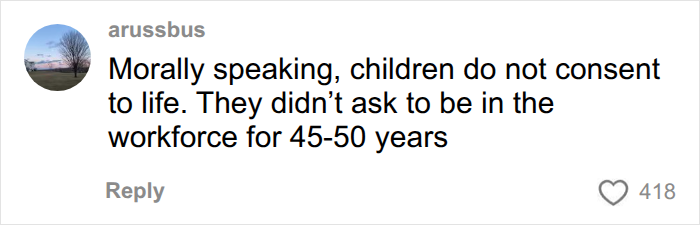
Ramsey’s words sparked quite the debate, with some completely disagreeing


































Thanks! Check out the results:
Total votes ·
Newsletter
Subscribe to Access
Exclusive Polls

By entering your email and clicking Subscribe, you’re agreeing to let us send you customized marketing messages about us and our advertising partners. You are also agreeing to our Privacy Policy.
Thank you! You’ve successfully subscribed to newsletters!
📢 Gostou da notícia? Compartilhe com os amigos!
Este artigo é uma tradução automática de uma fonte original. Para ler o conteúdo na íntegra: Clique aqui.