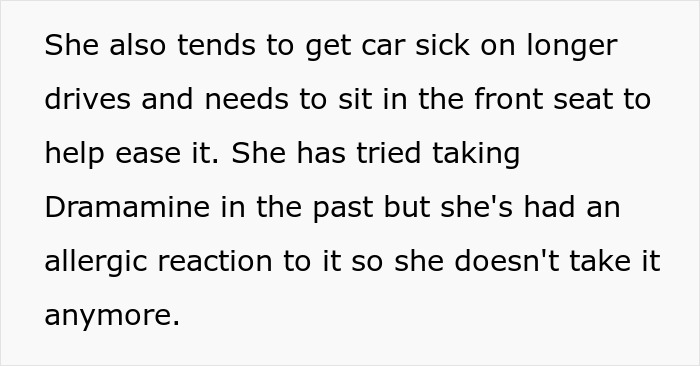
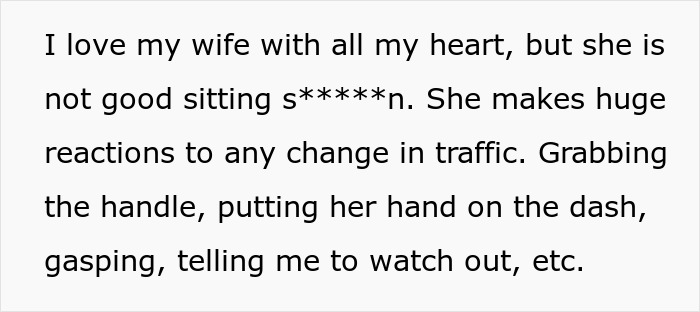
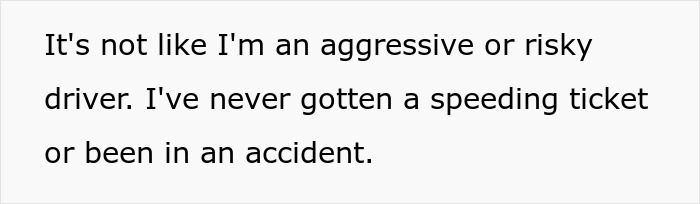
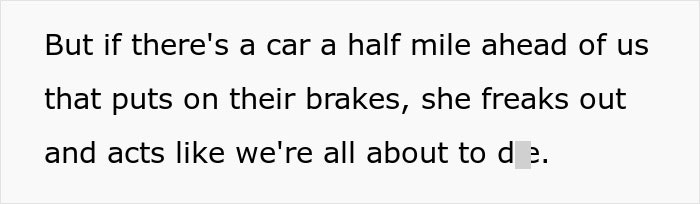
Road traffic crashes account for more than a million fatalities globally each year, so responsible driving is paramount. When you get into your car, your goal should be to get to your destination safely. You can love your family with all of your heart, but it doesn’t mean that they’re perfect or beyond criticism. If they behave in dangerous ways while you’re in the driver’s seat, you have to ensure everyone’s safety.
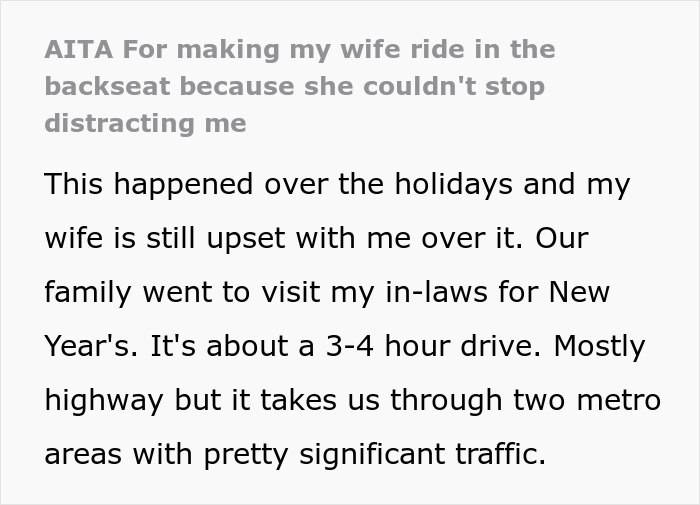
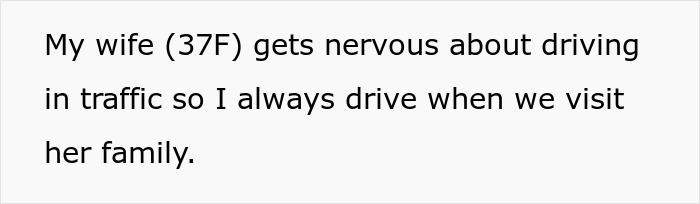
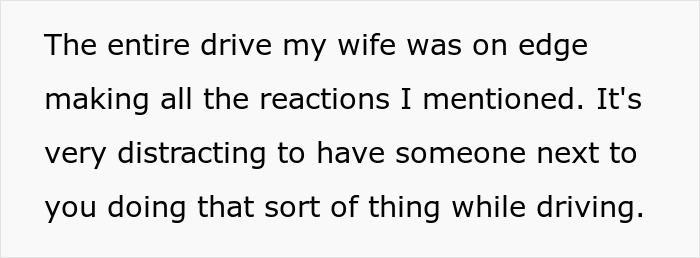
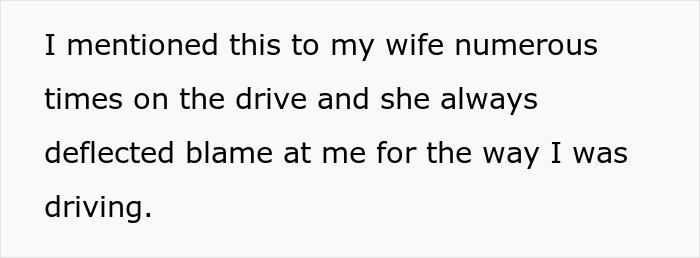
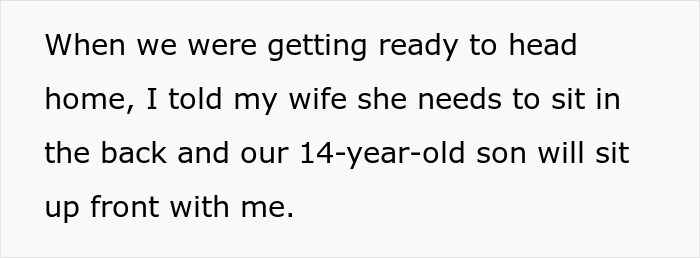
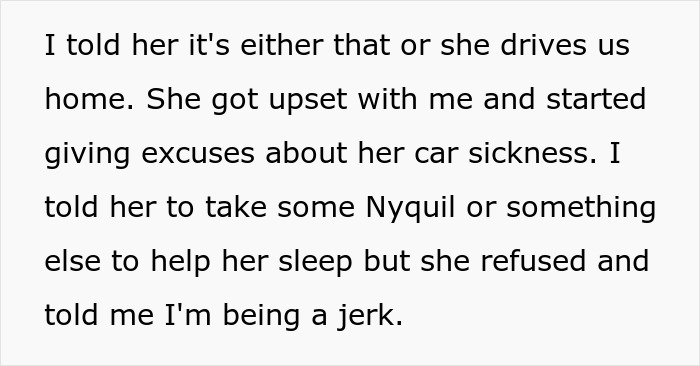
That’s what recently happened to one man, who asked his wife, who reacts in very distracting ways, to ride in the back of the car, which she found humiliating. He then turned to the AITA online community to find out if he did, in fact, make a mistake by doing this. You’ll find the full story and the internet’s reactions below. And remember, always drive safely!
When you’re behind the wheel, it’s absolutely vital that you can focus on the road. However, some passengers can make this incredibly difficult
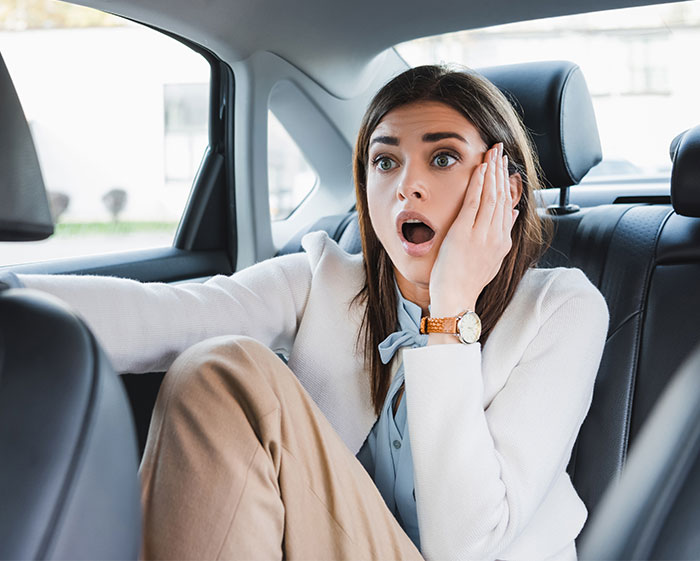
Young woman having an anxiety meltdown in the back seat of a car, illustrating risk and front seat ban.
It’s vital to stress just how massive an issue road safety is. It might sound harsh, but it’s common sense that you cannot and should not distract the driver.
Sometimes, we’re not aware of how our actions impact others. But if we continue behaving in risky ways even after being warned multiple times, the responsibility lies with us to own up to our mistakes and grow as individuals.
ADVERTISEMENT
It’s important to remember that we sometimes have to (temporarily!) put our personal feelings aside for the sake of bigger priorities like safety. Something else to keep in mind is that when your partner enforces healthy boundaries, it doesn’t mean that they don’t love you. It simply means that they are setting out very clear expectations for communication, respect, and their needs. Boundaries tend to lead to more authenticity rather than less.
The World Health Organization estimates that around 1.19 million people lose their lives every year as a result of road traffic crashes. Furthermore, between 20 million and 50 million more people suffer non-fatal injuries, including disabilities.
Road traffic injuries are the leading loss of life for children as well as young adults, aged 5 to 29. However, most (two-thirds) road traffic fatalities happen among working-aged individuals, aged 18 to 59.
The vast majority (92%) of the world’s road fatalities happen in low- and middle-income countries.
Meanwhile, more than half of all road traffic fatalities occur among vulnerable road users, such as pedestrians, cyclists, and motorcyclists.
The effects of road accidents extend beyond the horrendous loss of life, too, and impact the economic welfare of people, their families, and entire nations. According to the WHO, these crashes cost most countries 3% of their gross domestic product due to lost productivity from injuries or disabilities.
Even small distractions, like talking to passengers or thinking about non-driving-related things, can lead to mistakes on the road
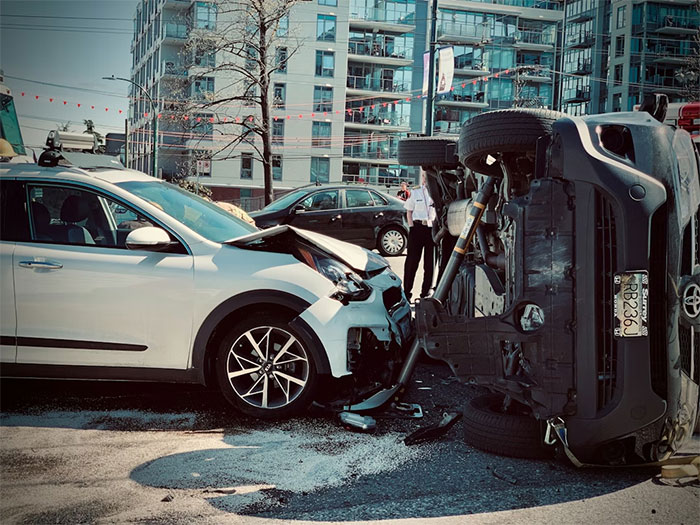
Car crash scene showing a white vehicle front damaged next to an overturned black car after an anxiety meltdown risk.
As per the World Health Organization, transport systems have to be both responsive to the needs of users and forgiving of human error.
If the goal is to ensure a safe transport system for all road users, the main things to focus on are safe roads and roadsides, safe speeds, safe vehicles, and safe road users.
As AANT notes, backseat drivers, who judge and comment on your behavior while you’re behind the wheel, can be both a curse and, sometimes, even a blessing.
On the one hand, excessive comments about your driving can be both annoying and distracting and might make you second-guess yourself.
On the other hand, these backseat drivers can “act as a second set of eyes and spot hazards on the road.”
Whatever their intentions might be, you, as the driver, should remind all of your passengers that you’re in charge of everyone’s safety.
“Simply ask yourself if their opinion is helping prevent a potentially dangerous situation or causing it. If their comments are valid – like perhaps you took a turn too fast – consider taking their feedback on board,” AANT suggests.
ADVERTISEMENT
That being said, it’s still best to avoid distracting your driver. Even the smallest lapses in concentration can lead to devastating results. Recent research by RAC revealed that 63% of drivers admitted to making mistakes on the road when they were distracted by internal or external factors.
Of these drivers, 43% said that talking to passengers led them to make mistakes. And 37% noted that just thinking of something other than driving led to errors. These mistakes included things like speeding, ending up in the wrong lane, missing a junction, or nearly colliding with another car, pedestrian, or cyclist.
What do you think, Pandas? Was the driver right to ask his wife to ride in the back so that he would be less distracted? How would you have handled the situation? What can your passengers do to support you as the driver, instead of distracting you? Let us know in the comments below. And, once again, stay safe on the road.
Later, the author shared more context about the situation in the comments
Reddit conversation discussing anxiety meltdown risks and a husband banning wife from the front seat for safety reasons.
Text conversation about reckless driving and passengers’ anxiety reactions, highlighting husband banning wife from front seat after meltdown risk.
Screenshot of a forum discussion about a husband banning wife from front seat after her anxiety meltdown risks safety.
ADVERTISEMENT
Most readers thought the driver did the right thing, and that everyone’s safety was the top priority
Comment discussing a husband banning wife from the front seat after her anxiety meltdown puts them at risk.
Screenshot of an online comment discussing a wife’s anxiety meltdown leading to being banned from the front seat by her husband.
Screenshot of a Reddit comment discussing a husband banning his wife from the front seat after her anxiety meltdown.
Comment discussing husband’s decision to ban wife from front seat due to anxiety meltdown risking family safety.
ADVERTISEMENT
Text conversation discussing anxiety meltdown and husband banning wife from front seat for safety reasons.
Comment text discussing how a wife’s anxiety meltdown puts them at risk, leading the husband to ban her from the front seat.
Screenshot of a Reddit comment discussing anxiety meltdown risks and front seat driving safety in a husband and wife situation.
Screenshot of a Reddit comment discussing a husband’s reaction to his wife’s anxiety meltdown and front seat ban.
ADVERTISEMENT
Comment about anxiety meltdown risk, highlighting husband banning wife from front seat after incident.
Comment about distracted driving risks and wife’s anxiety meltdown leading to ban from front seat for safety.
Text post describing a husband banning wife from the front seat after her anxiety meltdown puts them at risk.
Screenshot of an online comment discussing anxiety meltdown and safety risks leading to a husband banning his wife from the front seat.
ADVERTISEMENT
Reddit comment discussing anxiety meltdown and its impact on relationships, highlighting husband banning wife from front seat.
Comment about anxiety meltdown causing dangerous driving distraction shared in an online discussion thread.
Reddit comment discussing husband banning wife from front seat after anxiety meltdown risks their safety.
Reddit comment discussing husband banning wife from front seat due to her anxiety meltdown putting family at risk.
ADVERTISEMENT
Text excerpt discussing husband banning wife from the front seat after her anxiety meltdown poses risk while driving.
Comment discussing wife’s anxiety meltdown creating a dangerous situation and suggesting medical options for motion sickness.
Reddit comment warning about anxiety meltdown causing dangerous distraction for driver, risking lives and reactions control needed.
Comment discussing a husband’s decision to ban wife from front seat after anxiety meltdown risks their safety.
ADVERTISEMENT
Screenshot of a Reddit comment discussing a husband banning his wife from the front seat after her anxiety meltdown risks their safety.
Redacted online comment discussing anxiety meltdown and safety risks leading to husband banning wife from front seat.
Screenshot of an online forum discussion about a husband banning wife from the front seat after anxiety meltdown.
ADVERTISEMENT
Comment from auto claims adjuster explaining anxiety around driving and choosing back seat for safety after trauma.
Screenshot of a forum comment discussing anxiety meltdown and safety risk related to a husband banning wife from the front seat.
Screenshot of an online comment discussing anxiety meltdown and its impact on safety in a marriage.
Reddit comment discussing husband banning wife from front seat after anxiety meltdown putting them at risk.
ADVERTISEMENT
Comment on a forum recommending Xanax after a wife’s anxiety meltdown causes safety concerns, leading to a husband banning her from the front seat.
That being said, not everyone was on the same page. Some folks thought that the driver could have handled things differently
Screenshot of a forum comment discussing a husband banning his wife from the front seat after her anxiety meltdown.
Screenshot of a Reddit comment discussing a husband banning his wife from the front seat after an anxiety meltdown risk.
Comment discussing husband banning wife from front seat after her anxiety meltdown risking their safety.
ADVERTISEMENT
Screenshot of an online comment discussing anxiety meltdown risks and husband banning wife from the front seat while driving.
Screenshot of a Reddit comment discussing anxiety meltdown risks and banning wife from front seat after meltdown.
Reddit comment discussing anxiety meltdown risks and a husband banning wife from the front seat for safety reasons.
Thanks! Check out the results:
Total votes ·
Newsletter
Subscribe to Access Exclusive Polls
By entering your email and clicking Subscribe, you’re agreeing to let us send you customized marketing messages about us and our advertising partners. You are also agreeing to our Privacy Policy.
Thank you! You’ve successfully subscribed to newsletters!
📢 Gostou da notícia? Compartilhe com os amigos!
Este artigo é uma tradução automática de uma fonte original. Para ler o conteúdo na íntegra: Clique aqui.