NÃO PERCA: ‘#SKYKING’ Director Patricia E. Gillespie on the Life and Death of Beebo Russell, the Ground Crew Agent Who Stole a Commercial Jet 🍿
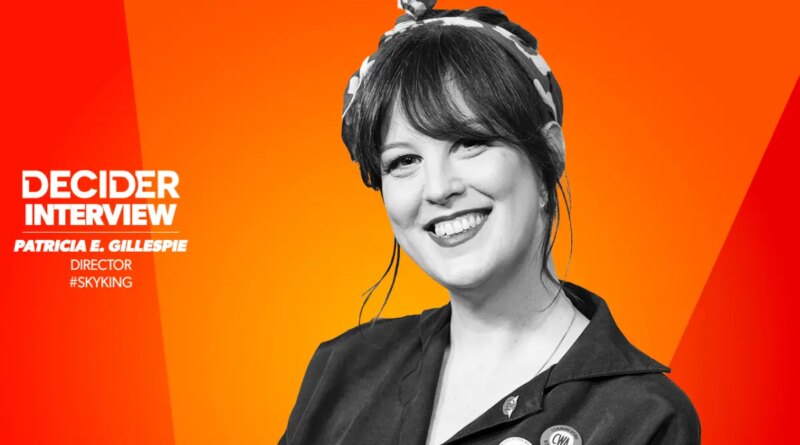
Richard “Beebo” Russell—the ground crew worker who successfully stole, took off, and, eventually, intentionally crashed a commercial jet in 2018—is an internet legend. To some, he’s a working class folk hero. To others, he’s a symbol of white, male rage. Director Patricia E. Gillespie hopes that her documentary, #SKYKING—now streaming on Hulu in the U.S.—can transform him into a nuanced, but ultimately, good person. Just a guy whose long hours, less-than-minimum-wage pay, isolation, and untreated mental health issues drove him to desperate measures.
“This was a story where a man’s suicide unfortunately had been glamorized, politicized, sensationalized,” Gillespie told Decider in a recent interview. The director—known for The Secrets We Bury and The Fire That Took Her—had no desire to contribute to that narrative. The best way, she decided, to tell Beeob’s story, while hammering home an anti-suicide theme, would be to film Russell’s loved ones listening to the 70-minute audio track of him intentionally ending his life.
As an employee of Horizon Air at Seattle–Tacoma International Airport, Russell used his badge access to sneak past security and performed an unauthorized take-off completely solo, despite his lack of pilot experience. During his flight, Russell spoke to Sea–Tac air traffic control in a friendly, casual manner, assuring them he has no intentions of hurting anyone, but describing himself as “a broken guy … got a few screws loose, I guess.”
Despite Russell’s calm tone, moments of panic, mania, and remorse come through. He vomits several times, regrets that his loved ones will be “disappointed,” and frankly states that he no longer wants to live. He also, unprompted, offers a reason for why he did it: “Not making minimum wage. We’ll chalk it up to that. Maybe that will grease the gears a little bit with the higher ups.” (In 2018, Russell was making $12.75 an hour, less than Seattle’s minimum wage of $16 an hour.)
In his final moments, Russell, incredibly, pulled off a barrel roll, mere feet over the Puget Sound. It’s a triumphant moment, immediately followed by a tragic one: Russell intentionally nose-dived the plane into a sparsely populated island, taking his own life, but injuring no one else.
Gillespie spoke to Decider about gaining the trust of Russell’s mom Karen, that infamous “I’m a white guy” line from the audio, and mental health issues among men. “You shouldn’t feel like you have to take a plane into the sky and talk to the FAA to be able to say, ‘Hey, I’m a broken guy with a few screws loose, and I didn’t notice.’”

DECIDER: In your director’s statement, you said you’ve been working with Beebo’s mom for five years, gaining her trust. Could you summarize that journey for me?
PATRICIA E. GILLESPIE: The second I heard this audio, which was around the time the incident happened, I couldn’t get it out of my head. As a filmmaker, I’m interested in stories that relate to social class in American society, and I saw a lot of that there. I’m also interested in public health—and men and mental health is certainly something that touches that. But I also view myself as a relational filmmaker. I see a lot of my job to be an advocate and help people tell their own stories. Obviously, I adhere to rigorous journalistic standards and ethics, but it’s different than nightly news or quick reporting. We form relationships with these people. We help them figure out how to articulate what they want to say about their life experiences.
I knew when I found this audio that it was going to be important for me to tell this story through the point of view of the family, because I thought that would have the most impactful anti-suicide message. This was a story where a man’s suicide unfortunately had been glamorized, politicized, sensationalized. It seemed like the best way to cut through that was to show the reality of what suicide is—unfortunately, passing a tremendous amount of personal pain on to the people that love you. The only way to show that was to show those people who loved him. But I knew they weren’t ready to talk to the media.
A couple years went by. I couldn’t shake the story. It kept feeling more important, more timely. I did what my producing partner, Linsey Romero, calls “the Victorian letter.” I spent weeks drafting this two-or-three page letter. “Hey, I know you’re maybe not ready to talk, but this is what I see in your son’s story. This is what I think might be being missed. This is what I still have questions about. This is why I think it’s important, why I think you’re important, even though I don’t know you. But I know that’s your kid. I know you love him. I know this must have hurt. Let’s talk.” I’m really thankful that we started talking.
We went back and forth for a long time. At the beginning she had more questions for me than I had for her, which I’m comfortable with. I should be accountable to the people I make films with. We talked a lot about how we were raised, what kind of backgrounds we came from. It was important to her that I was coming at this from the point of view of someone who grew up not dissimilar to them. I had also lost people I cared about to suicide. The fact that I was interested in this question of men and mental health was important to her. But she had been burned by the media and was very upset, understandably, at how social media, in particular, had taken him as this poster child for these out-there, wack-a-doo, Nazi, white supremacist bad guys. Then the other end of the the spectrum had branded him this white nationalist terrorist. None of this aligned with his values. It was a fundamental lack of curiosity about who this guy was, and what actually brought him there, because there was like a shinier political box to put him in on either side.
She was nervous. But she also always had a sense that his story, if it was told properly, could help people. That’s what she wanted to do. It had already been helping people who were able to listen to it with curiosity and compassion and humanity online. She wanted to do that in a bigger way. Thus, bravely, she ultimately decided to do that. Because of Karen’s bravery, the rest of the family and friends got on board.

How did you come up with the framework of Beebo’s loved ones listening to this audio of his last moments? It was so affecting, but a hard thing to ask people to do, I imagine.
I felt I had to show, most directly, the impact of suicide on people. When someone completes suicide, there are survivors, and I felt that in order to get the anti-suicide message across—and really undo some of this glamorization that had happened on the internet—I had to show the impact it had. That seemed to me to be the most direct way to do it.
There’s this movie by Werner Herzog called Grizzly Man. It’s about this guy and his girlfriend getting mauled by a bear. Great film, highly recommend it. There’s a tape of what had happened to him, because he was documenting his life, and at some point in the film, [Herzog] listens to the tape, and suggests that no one ever listens to it. I remember that just hitting me so deeply, because you never actually hear the tape in this film, unlike in our film. I remember seeing somebody [listen to the tape] was more powerful. I borrowed from that idea and thought, “What does it look like if that’s the spine?”
I wanted Beebo’s words to be foremost in the movie, because that’s what we have left. As much as he can say about himself—which is either the audio recordings of that flight or the archive that his sisters and his aunt were able to provide us—I wanted that foregrounded. But I also didn’t want to glorify it. That seemed like the right path to getting those things done.
The movie starts with a trigger warning, and I see why. I was surprised by how upset I found myself, listening to the audio of Beebo deciding to take his life. I wonder how that affected you listening to that over and over again?
We knew we were going to have to do [a trigger warning]. This may be a film that some people—particularly people who are in a fragile, emotional state—this might not be the best time for them to watch it, and that is okay. We always knew that was going to be included.
It’s something that there’s a lot of discussion about in the documentary film community: How do these things affect us? I underestimated what it was going to be like to listen to somebody ending their life for 80 hours a week, for years on end. In the edit, you’re listening to it all the time. We tried to be sensitive about it. We had people with different levels of comfort. Some people had to stay away from that, when we were on set, or be careful about exposing themselves to that in the edit, which is fine. We were happy to accommodate, because this is ultimately about trying to improve people’s mental health. There are interesting conversations about that going on in the documentary community. I made another film called The Fire That Took Her years ago, that featured a woman who was attacked by her boyfriend, and she was very severely burned. And similarly, I don’t think I understood. There’s stuff we see and listen to that never makes it into a film, right? Because it’s not appropriate for other people to see. I didn’t need to see it. Nobody needs to see certain things, and those do wear you down.
Thanks for asking that question. I think as an industry, we are figuring that out. We have really great partners, [like] Mary Lisio, who was a producer on this. The first project I ever worked on with her was Fall River, about a murder that had happened in Massachusetts. She made sure, through Blumhouse, that there was a therapist on hand to help people. Some of these bigger studios and organizations are doing a lot to help buffer that out. It’s a privilege to do this work, and it’s important we take care of ourselves while doing it.

Was the whole audio included in the movie, or are there parts that we didn’t hear?
The audio’s about 70 minutes long. Not all 70 minutes are in the film. There’s definitely stuff that’s removed. There’s also a ton of people telling him how to fly the plane. There are big moments of silence. There’s a few jokes that didn’t make it in. But nothing [is missing] that we thought would change the nature of the story, or provide any additional insight. What I would consider to be the meat of that call is in there. It’s tempting to just say, “Oh, 70 minutes, wow, you only have 20 minutes left to hit a feature film.”
But the interplay between how this impacted his family and what was going on in his life before this moment happened—we needed to leave a lot of space for that. That’s where a lot of the public misunderstanding—some of the inaccurate ideas about him, what he represented, or what brought him there—emerged out of those areas not being explored. We tried to keep it as lean as we could, so that you could get both sides of that point—both the incident itself, and the aftermath and the run-up to it.
I hate to bring up a buzz word, this documentary adds a lot to the “male loneliness epidemic” discussion. At one point, Beebo basically says he did this because he felt like he didn’t know how else to have a meaningful conversation about his mental health. How did you approach weaving in that theme, and what’s your take on that issue?
I say this as a feminist: Men are not okay. This has not been going well. Hurt men hurt people. Hurt men hurt themselves. There’s this baddie feminist lady named bell hooks, who had a really strong relationship with her brother. She wrote a lot about how patriarchy harms men. I know the word “patriarchy” can feel sensitive and shitty for some people, excuse my French. The fact that we dis-entitle men from their feelings, so that they can’t talk about it—that they’ll be “feminized” if they do, and that’s the worst thing they could be—that’s a form of sexism that affects men. Therefore, it’s a feminist issue. We’re lucky that Beebo Russell had an extremely strong moral compass, and was a good person. When things became too much, he tragically only hurt himself. But there are people that go and hurt others. This is a public health issue.
We’ve gotten to a point where we condescend, blame, or roll our eyes. Not just at men, but in particular working class men. We’ve become really incurious. There’s a lot of evidence to say, “There’s something wrong here. These people need and deserve help.” If we aren’t curious, if we don’t try to get to the human story—even if there are things we might not agree with, things we we don’t like, or might be from the different side of the tracks, or vote a different way—the problem is just going to get bigger for all of us. It always breaks my heart a little when I see a gal be like, “Ha ha, the male loneliness epidemic.” Sure, there are some guys that are lonely because they behave badly. There are some women that are lonely because they behave badly. Then there’s a whole lot of people who just feel culturally stuck. We have to be together in solving that problem. I hope this film inspires some of those conversations.
You shouldn’t feel like you have to take a plane into the sky and talk to the FAA to be able to say, “Hey, I’m a broken guy with a few screws loose, and I didn’t notice.” You should be able to say that to your friends at dinner. If this movie can do anything, I hope it causes a few guys to just say, “I gotta call my buddy, ask him if he’s okay.” Or, when they’re asked the question, “Hey dude, how you doing?” that they feel they can answer it more honestly. You see people like [Beebo’s] brother Danny. He’s a tough dude. He is a man’s man. It felt like such a privilege to be let into his psychological space, and see him be emotional and honest. Sometimes there are going to be feelings about that: “Why are we seeing this guy I don’t agree with? I don’t like how he acts. I don’t feel bad for him.” But I think it’s really important to realize that he has those feelings, too. We’re living in a society where we don’t necessarily give him a space to express them. It’s important to ask ourselves, “What’s the cost of that?”

You address the “I’m a white guy” line—when Beebo jokes that Alaska Airlines wouldn’t hire him because of his race, which has made him a hero among white nationalists—head on. You don’t try to gloss over it. How did you decide to handle this delicate, awkward part of the story?
When I first heard that line, my heart sank. “Oh, shoot, is this guy a jerk?” The line is not a good line. But I also had heard enough of the tape where I couldn’t square it. Wait a minute, he just said, “If you ask me why I did it, blame it on not making minimum wage.” What does this mean? There’s got to be a story here.
I’m not going to lie, I was nervous about what story I would uncover. What if I did uncover something bad? It was a relief that I dug, and dug, and dug, and didn’t uncover any of that. In fact, I uncovered a pretty specific story that he had told many of his friends and relatives [about being told he was denied for a promotion at Horizon for being white], and his co-workers had observed. I spoke to many more co-workers that didn’t appear in the film. Unfortunately, those guys are afraid to talk in public because they still work [at Horizon, owned by Alaska Airlines]. The coworker, Andreas, you see in the film, has moved on to a different job. He spoke for all of them. It uncovered this important story about how corporations try to weaponize white grievance, really, to keep people apart, so they can do as they wish.
[People in the film] are uncomfortable talking about it, because they don’t want people to think they’re horrible or racist or whatever. It’s only when you push past that discomfort that you are able to say, “Hey, there’s actually a really important class story here that’s actively dividing people, and actively encouraging a racist work environment or culture.” If we don’t get past the discomfort, we’re never gonna get to that story. If we just hear something and say, “Nope that’s bad,” or “Nope, he means this, and he’s a white nationalist hero”—if we just calcify into our little political positions before we ask a single question about who this person was or what happened—we lose an important story that can help everybody.
If you know what a bread sandwich tastes like, you have a lot more in common with other people who know what a bread sandwich tastes like, than anybody rich who might vote like you, or look like you, or be your gender, be from your neighborhood, or go to your church or your synagogue or whatever. We miss that point when we become incurious, and instead are judgmental.
To be honest, it was a little stressful for me to do that. I went in there like, “Well of course, decent people are just going to want to know the truth.” Then I felt push back from people. Like, “You shouldn’t ask this. You shouldn’t do this. Are you being an apologist?” We are at a time where even when you’re just being curious—you’re trying to find the truth—you can be seen as an apologist by either side. Everybody can be mad at you.
Push back from the production side you mean, or like, ABC or Hulu?
Not in our core team that made the film. But you don’t make these things in a vacuum. People get nervous about that stuff. Even just comments online. There are these no-fly zones—sorry, I don’t mean to make a pun—in American discourse. They make me worried, because I think we lose some important truths. We lose the opportunity for solidarity. There is a real story about class solidarity, in a country where our class discourse really isn’t that great. We’re behind Europe on this. We don’t necessarily have an identity as working people—a lot of people don’tm in this country. We need to have these kinds of conversations if we want to get together and start solving problems.

Do you know if there’s been a change at Horizon since this incident? Are workers there still making less than minimum wage?
There have been improvements in the pay and there has been change. Like any industry, some companies have unions and are nice places to work, and some don’t. I would say, overall, this is an industry where people aren’t treated as well as you would hope them to. It’s a job that’s really important. If these people mess up their job when you get on a plane, you can get hurt. You can die. And they’re not paid or treated very well. Being a ground service agent is one example, but there are many many jobs in American society that function this way. I don’t think we necessarily pay enough attention to them. I hope the film causes us to ask some questions about that. If you’re one of the people watching this film who’s lucky enough to be able to get on a plane now and again, when you look out the window, I hope you think about those people who are loading your luggage in.
The absence of Hannah in the documentary was noticeable. I know there’s a note about it at the end, but have you heard from her at all since, now that the documentary is coming out?
We reached out to her numerous times. She never wrote back. She did not want to participate—the family reached out, she didn’t respond to them. The only thing I can imagine is that this is so incredibly painful, that she didn’t feel she could, should, or wanted to do it. I respect that fully. I really, truly feel for her. Unfortunately, around the time this incident happened, I saw a lot uncharitable, and frankly, untrue things posted about her online, totally unrelated to the film. I hope people walk away from our film understanding that she had the total right to her privacy, and this was devastating.
📢 Gostou da notícia? Compartilhe com os amigos!
Este artigo é uma tradução automática de uma fonte original. Para ler o conteúdo na íntegra: Clique aqui.